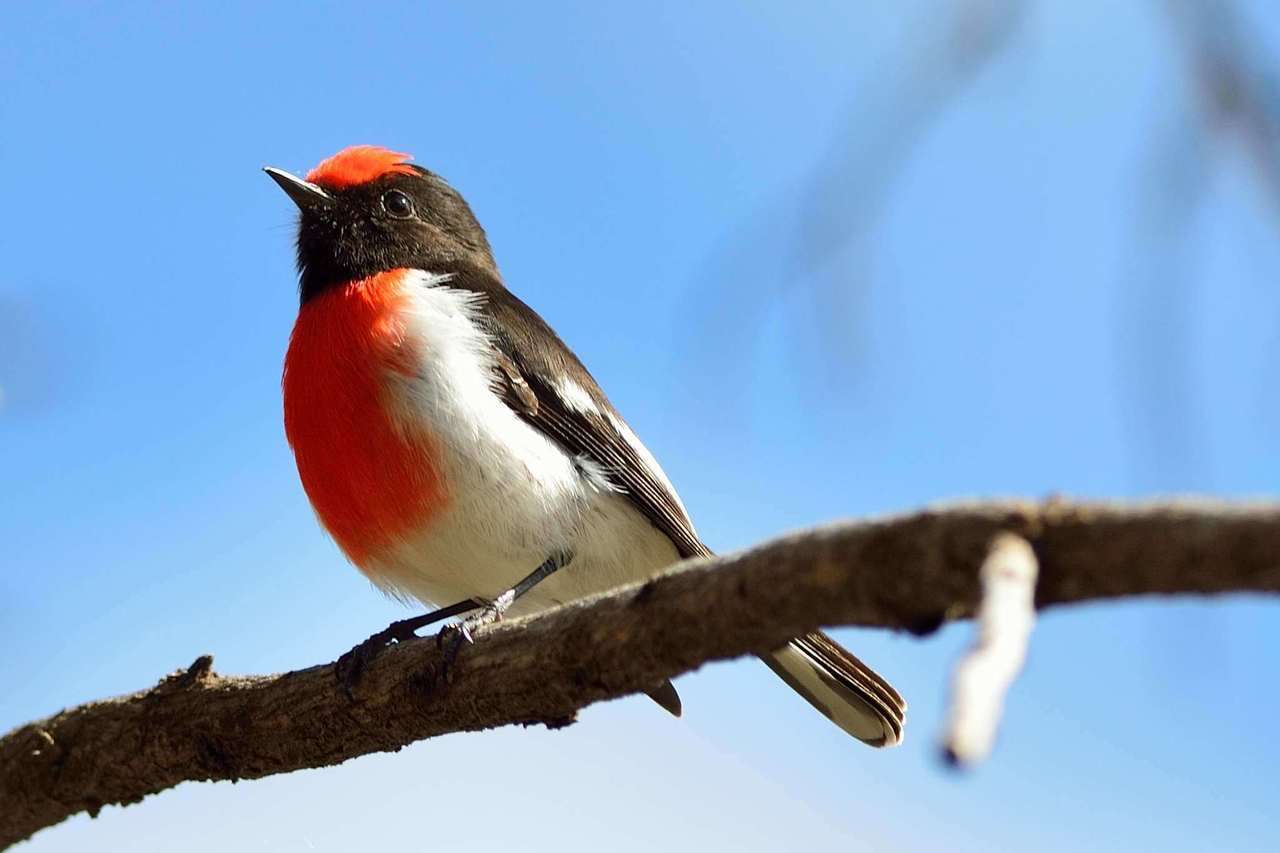
It isn't really a robin. Early colonists, a long way from home, called Australia's red-breasted birds robins after the European robin, which they only roughly resemble. The two aren't closely related at all.
This one belongs to the dry inland: woodland and scrub west of the ranges. It comes to the coast in droughts.
Once, perhaps, it didn't have to come so far. It's one of the dry-woodland birds that were part of western Sydney's shale country and are now gone or declining there. More than 90% of the Cumberland Plain's woodland has been cleared. At one reserve on the plain, red-capped robins haven't been seen since 1953, and the people who studied it called their disappearance difficult to explain. Research by the Australian Museum found that in small, narrow strips of bush, males were far fewer and predators a greater risk.
Each generation takes the bush it grows up with as normal. Today a red-capped robin in Sydney is a surprise. To someone in the 1940s, perhaps it wasn't.
The one in front of you, pouncing from its stump, has flown back into country its kind once knew.