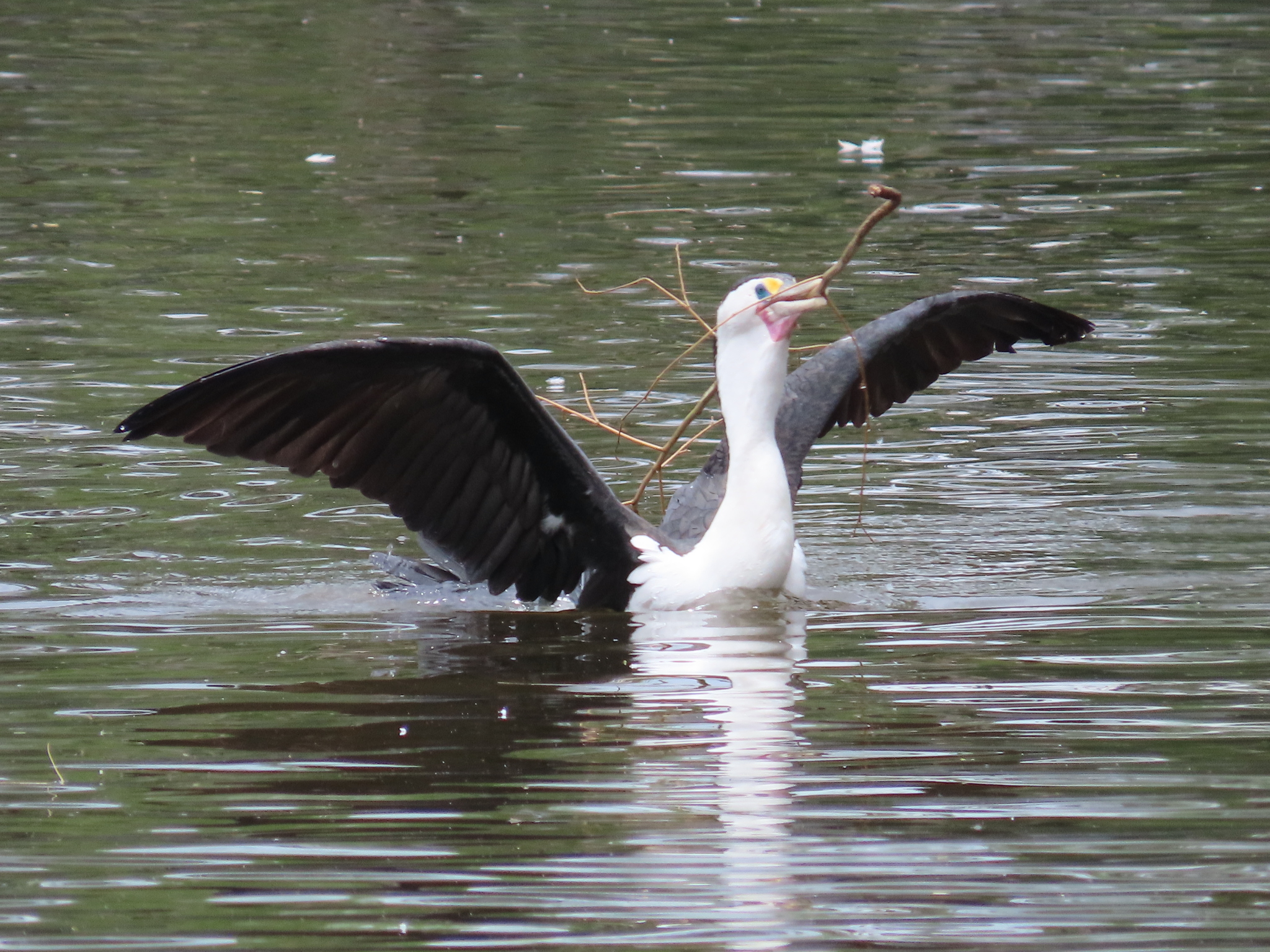
A pied cormorant's nest is made of seaweed, twigs or sticks, cemented together with droppings. It sounds unglamorous. It's the end of a long supply chain.
Like other cormorants, it catches its food underwater, diving and swimming with large, fully webbed feet. Everything it eats comes from the sea, and a good deal of it comes back out on land, around nests and perches. Seabirds are one of the ways the ocean's nutrients climb out of the water and feed the land.
People learned what that was worth. In the 1800s, seabird droppings, called guano, were dug from islands off Peru, where colonies of cormorants and other seabirds had piled them up for centuries, and shipped around the world as fertiliser. Countries fought over the islands. One Peruvian cormorant has been called the most valuable bird in the world.
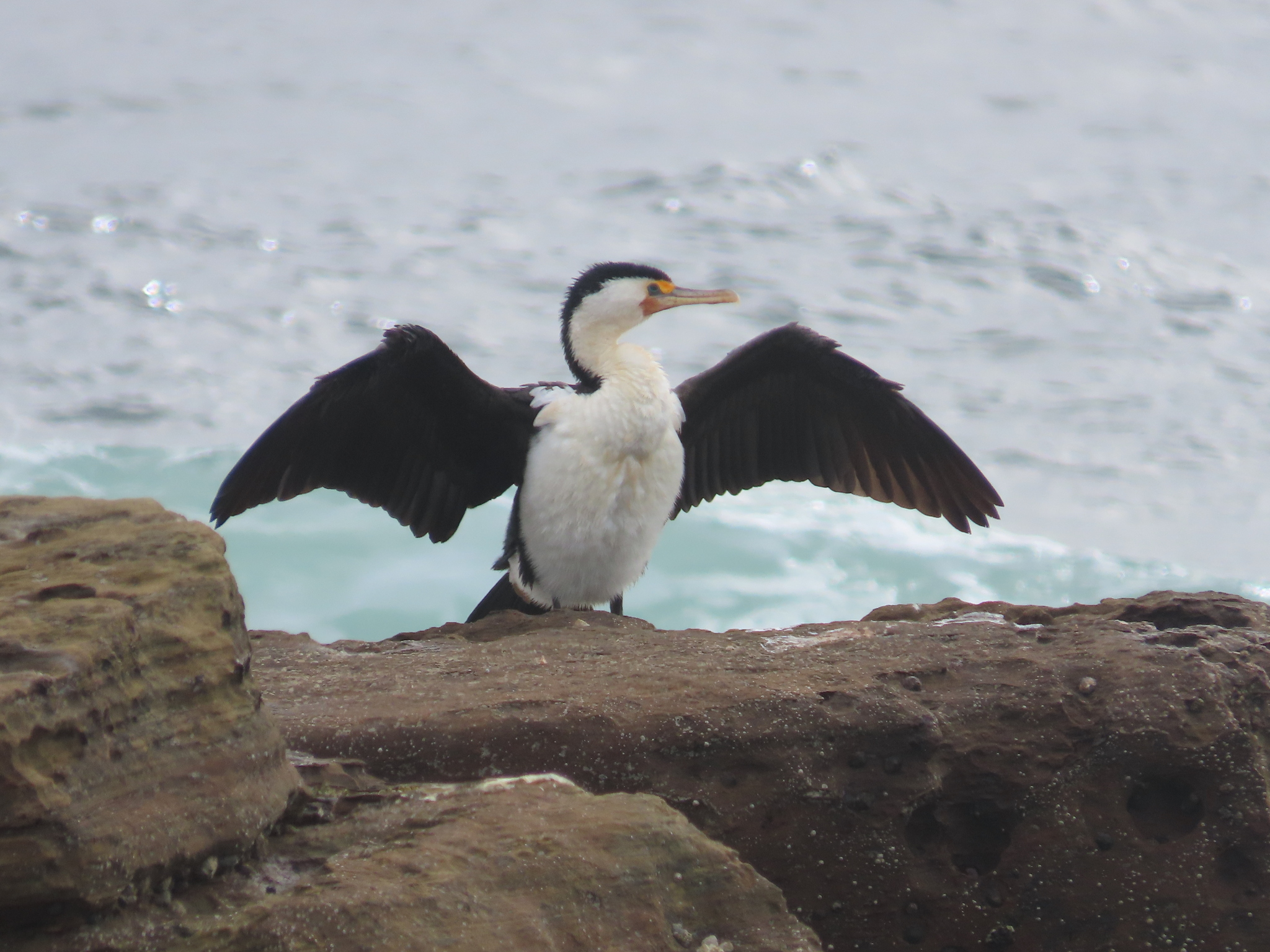
The cormorant drying its wings on the rocks has spent the morning hauling the sea ashore.