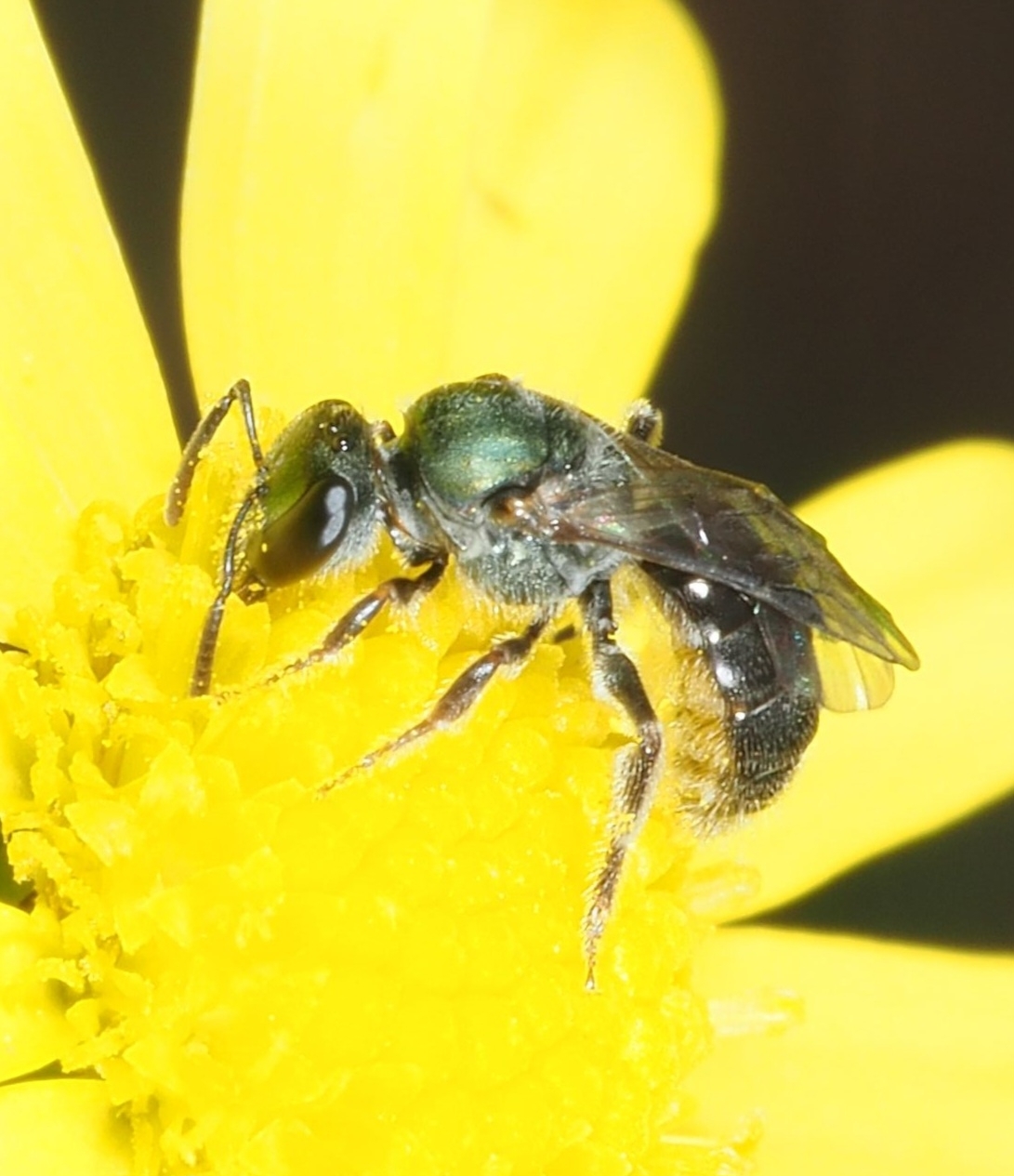
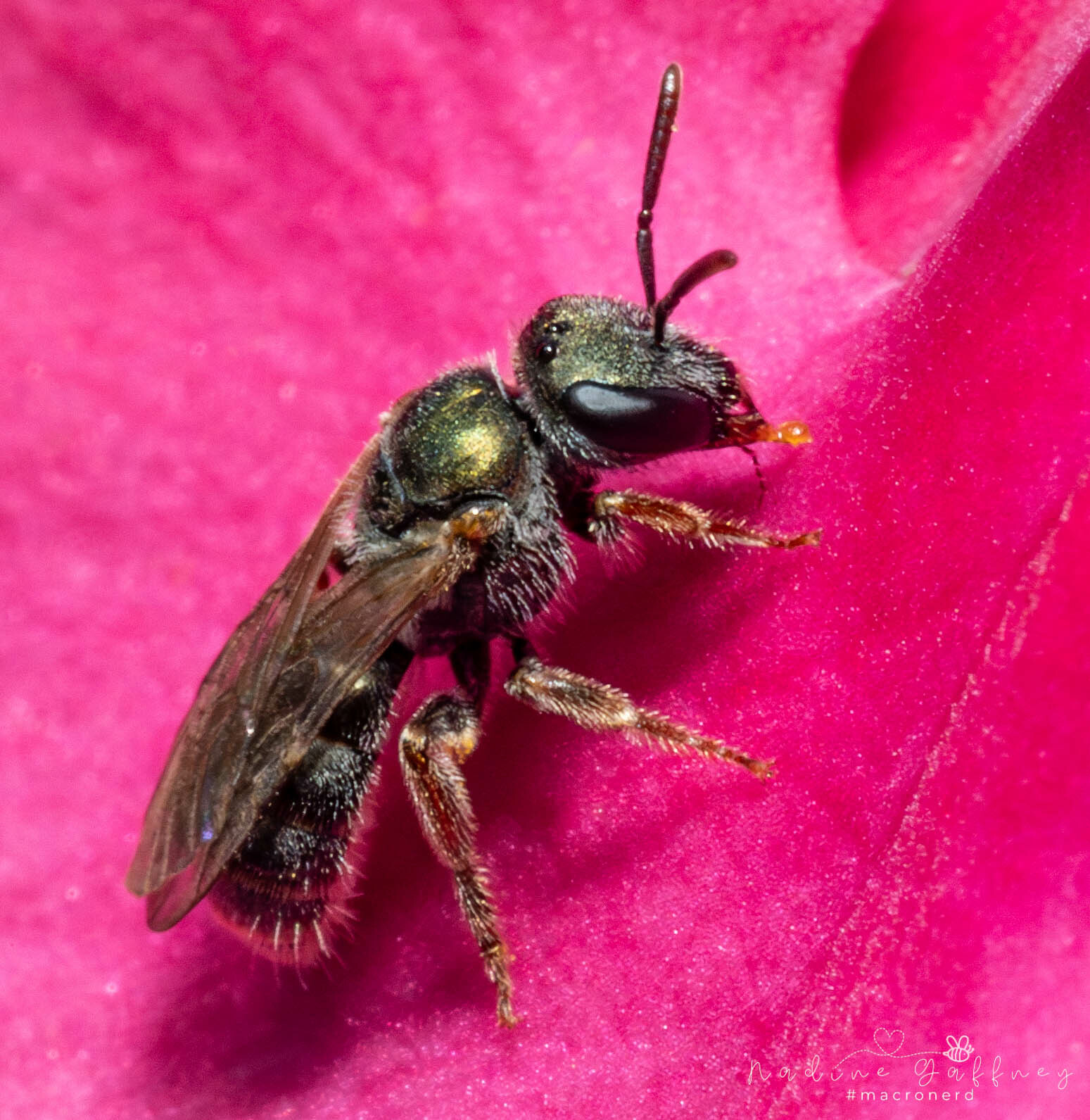
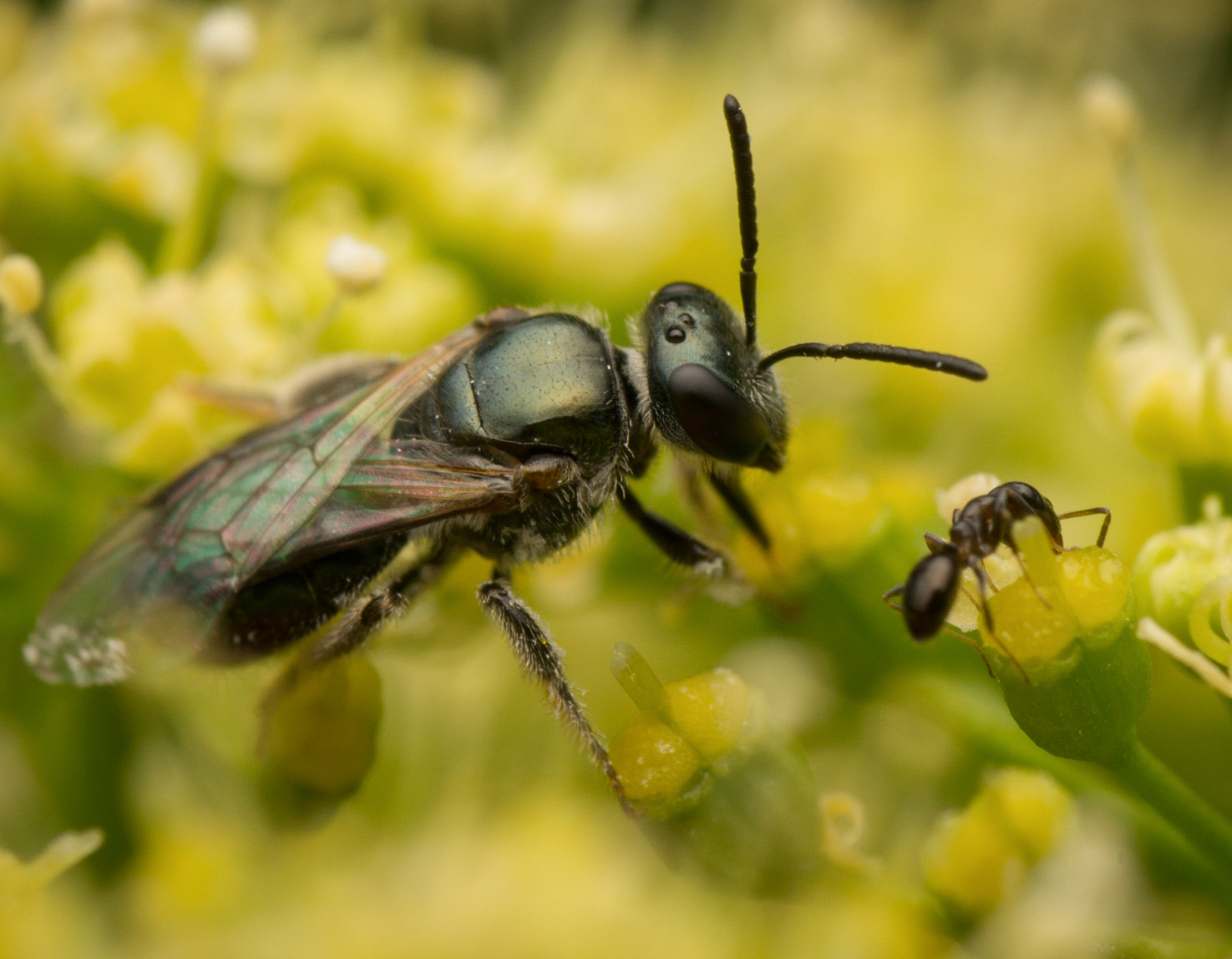
This tiny bee may not be going home to a nest of her own. Her kind can share one burrow in the ground: one nest was reported to hold at least 160 females, and every one of them was laying her own eggs. Like other furrow bees, the females can share the entrance and the main shaft, and each digs her own tunnel off to the side.
It isn't a hive. There's no queen and no workers. It's more like a block of flats with one front door.
Bees began as wasps that gave up hunting and went vegetarian, roughly 123 million years ago, and most bees still live alone. Honeybee hives sit at the far end of a long road from there. No one knows exactly how bee societies began, but one idea is that it started like this: neighbours sharing a doorway, then sharing more.
When she drops into a hole in the ground, she's going home to the neighbours.