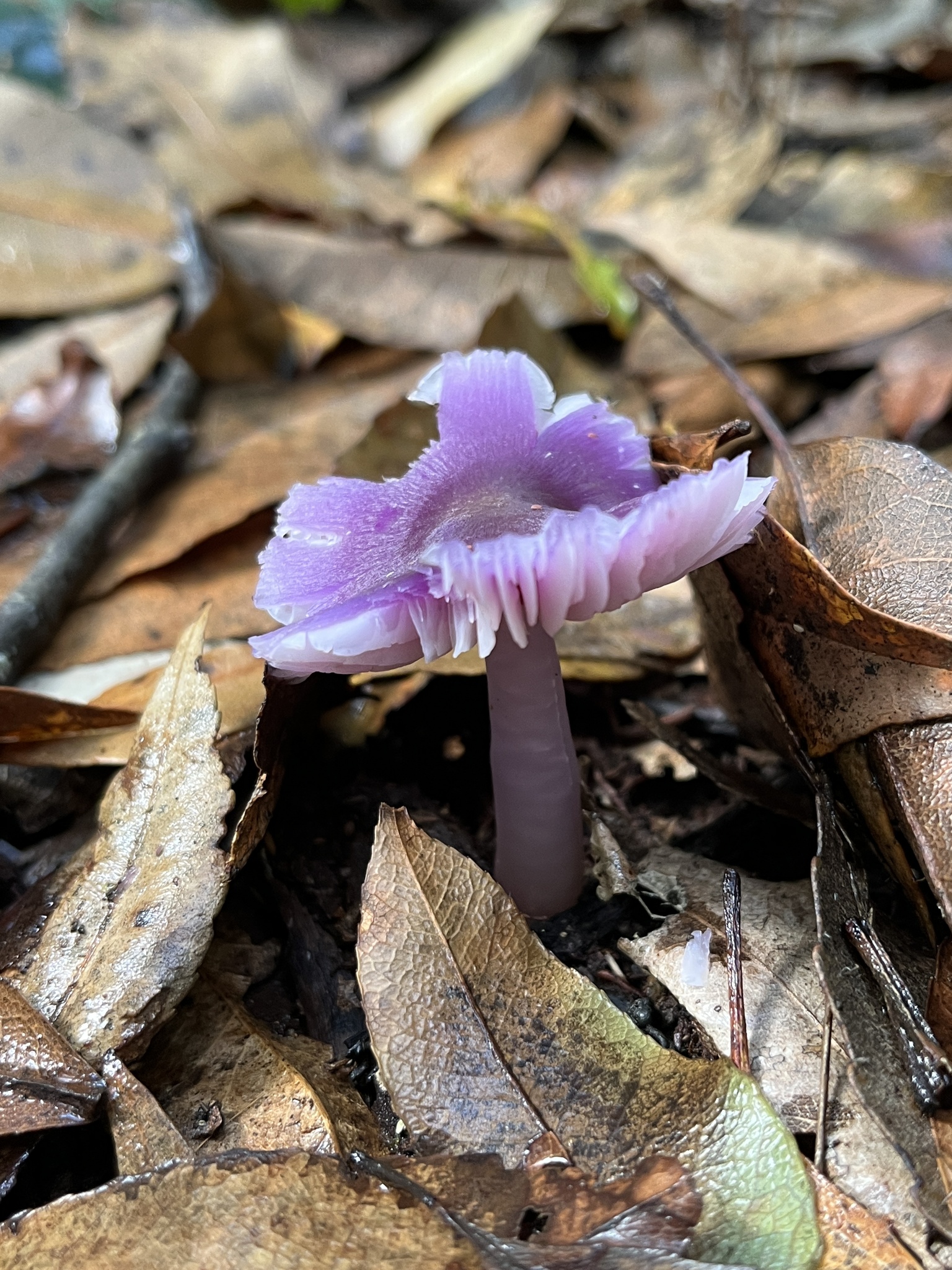
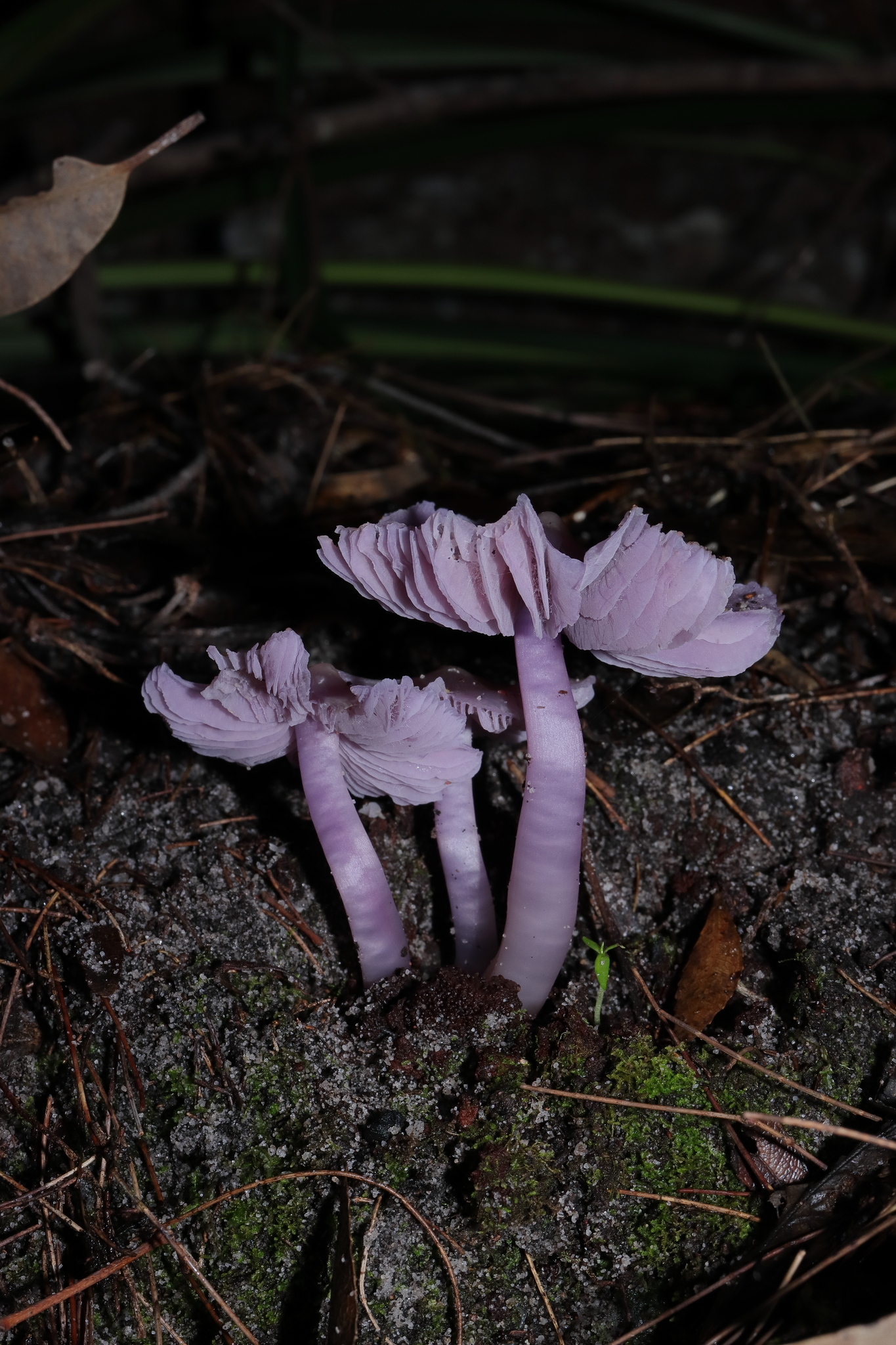
Its conical mauve cap splits from the edge towards the centre as it ages, which is how it got its name.
Here's a strange thing about waxcaps: no one is quite sure how they make a living. Mushroom hunters long assumed waxcaps fed on dead grass and leaf litter, like many small mushrooms. But they have proved very hard to grow in a lab, and chemical tests in some waxcaps suggest they may be drawing food from living plants instead. The question is still open.
What isn't in doubt is that the mushroom is only the fruit. The fungus itself is a web of fine threads that is there all year, in the soil, and after rain those threads can grow very quickly, much sooner than plants can respond. Fungi and plants have been bound up with each other for a very long time: fossils from Scotland show them living in partnership about 407 million years ago, when most plants didn't yet have roots.
You're looking at a mushroom that scientists still can't fully explain. Whatever it's living on, it's under your feet.