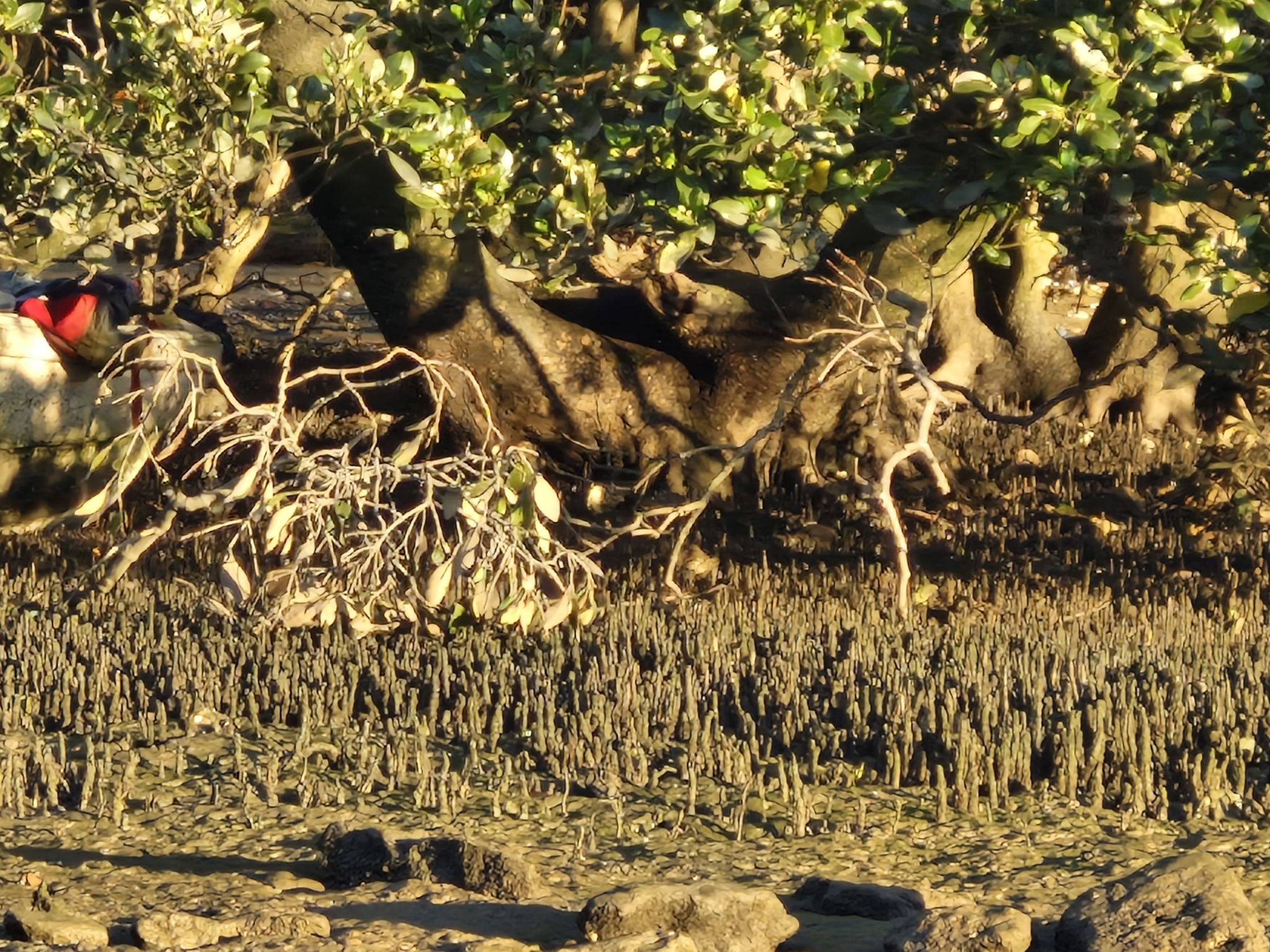
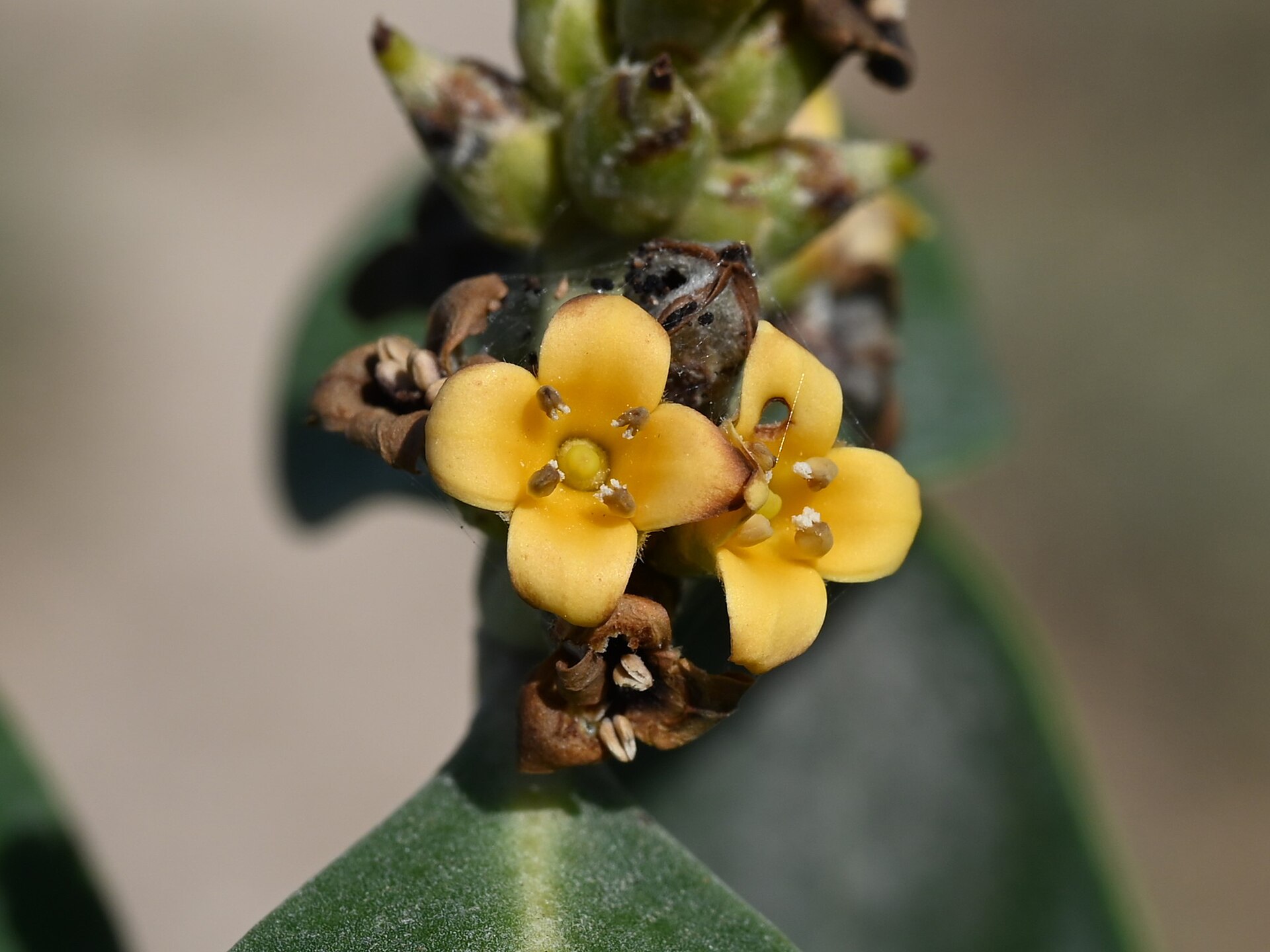
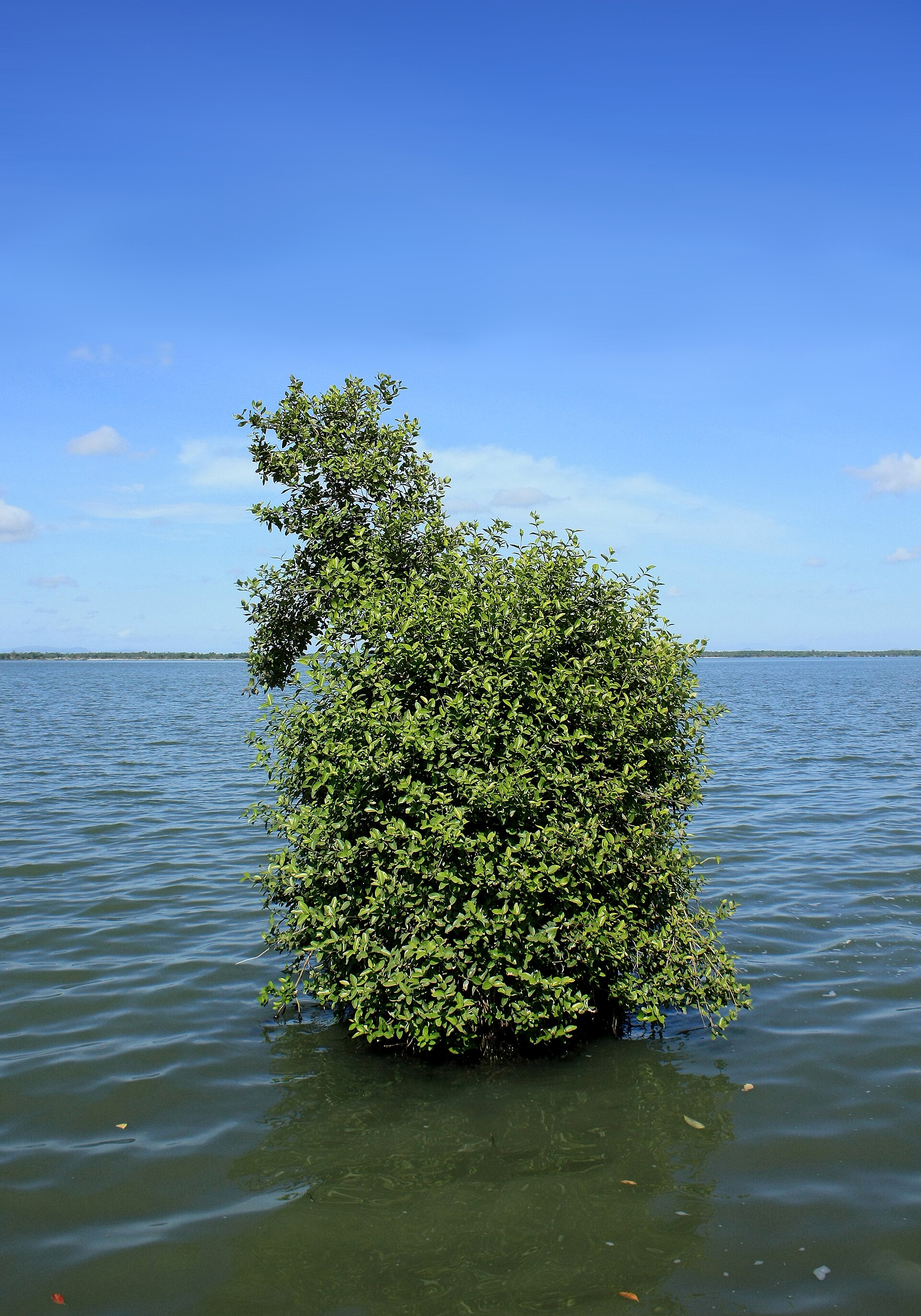
The pencil-like spikes sticking up out of the mud around a grey mangrove are its roots, breathing roots sent up from shallow roots below. And on the branches, its seed is already sprouting while the fruit still hangs from the tree.
This is a plant of warm seas, and its kind has followed the warmth before. Between 54 and 49 million years ago the world went through a hot spell. Fossil pollen shows mangroves then grew as far north as about 65 to 70 degrees latitude, near where the Arctic Circle lies today. Mangroves of this tree's own genus went further still, 10 to 15 degrees closer to the pole than the others.
Today Sydney's shores are near the cool edge of where mangroves grow. In a hotter world, this same kind of tree lined seas near the Arctic.
When the tide carries this one's sprouted seed away, it's setting off the way its kind always has: along the edge of the warm water, wherever that edge happens to be.