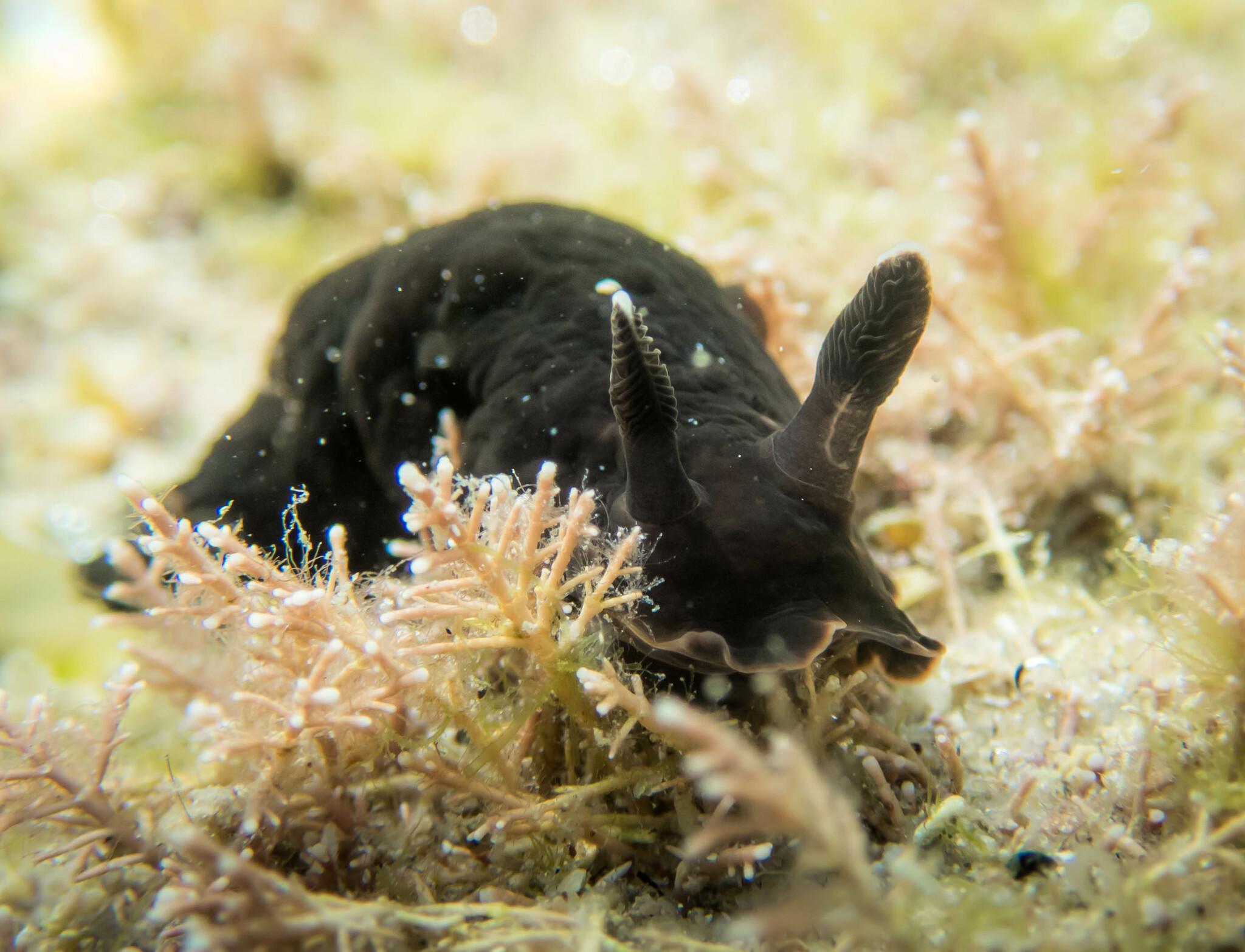
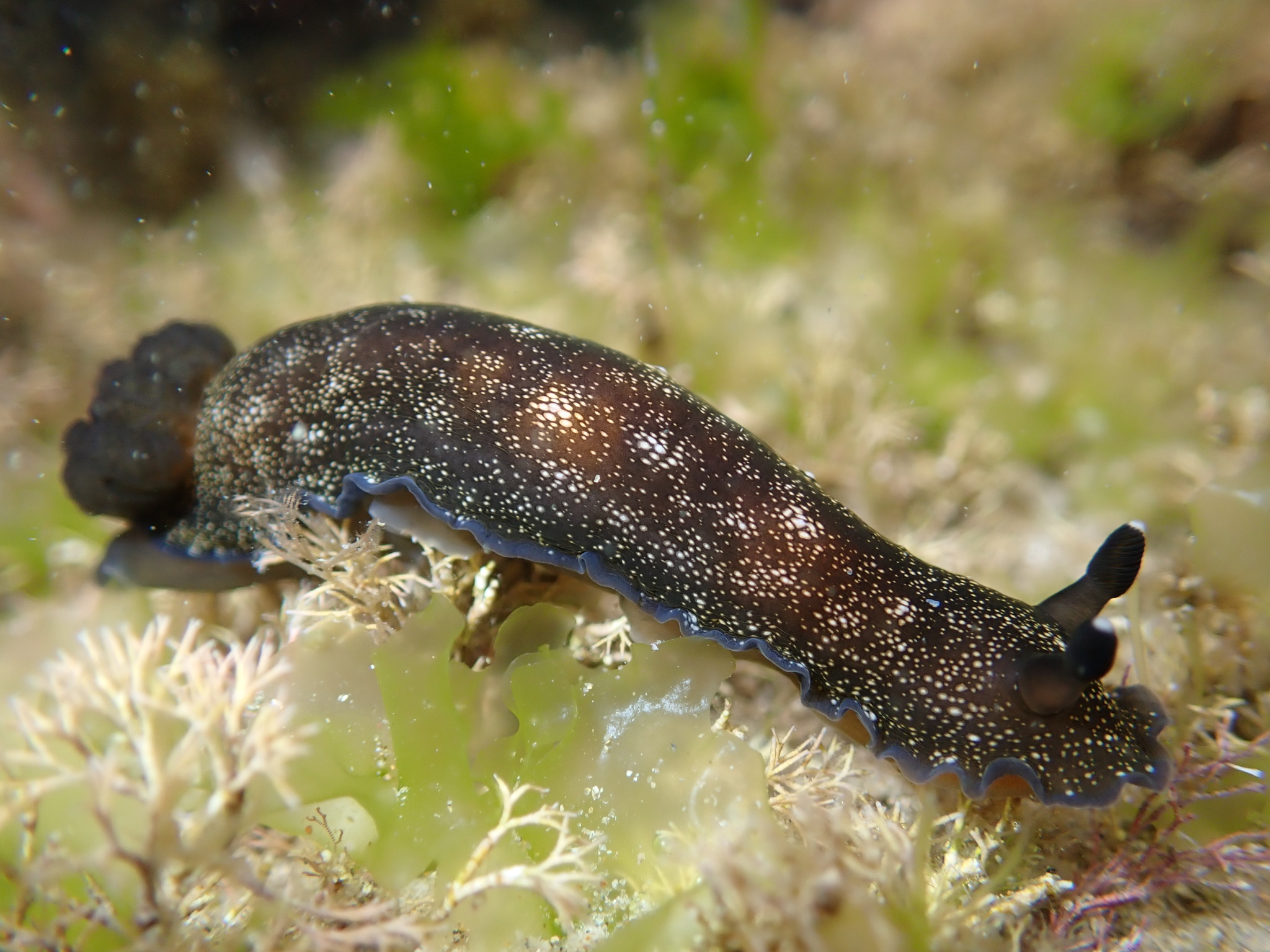
It starts life pink or orange and ends it black. And some of the white spots on its back aren't decoration: they're glands that ooze a milky, acidic liquid.
Almost nothing about an animal like this survives in stone. Sea slugs have soft bodies and at most a thin, fragile shell, so they leave few fossils. The oldest reliable fossil from the nudibranchs' wider group is only 24 to 26 million years old. Yet DNA suggests nudibranchs split from their closest relatives about 212 million years ago, in the Triassic, though the estimate is rough. For most of their history, the rocks kept nothing. Everything we know about how long they've been here, we've read in their genes.
So it is with this one. Its colour change, its acid, the way it moves over the rock: none of it will turn to stone. You're looking at what the fossil record never kept.