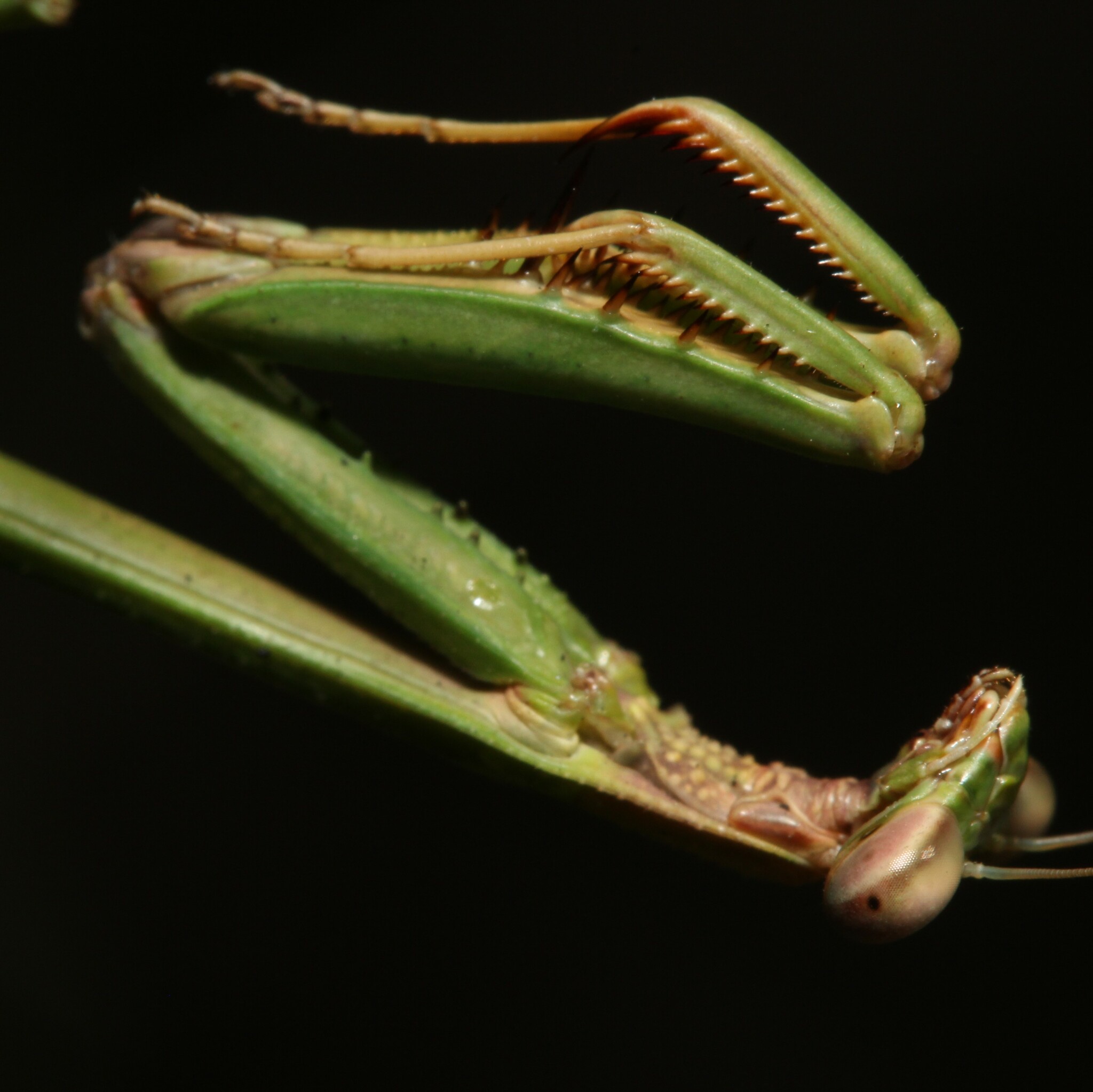
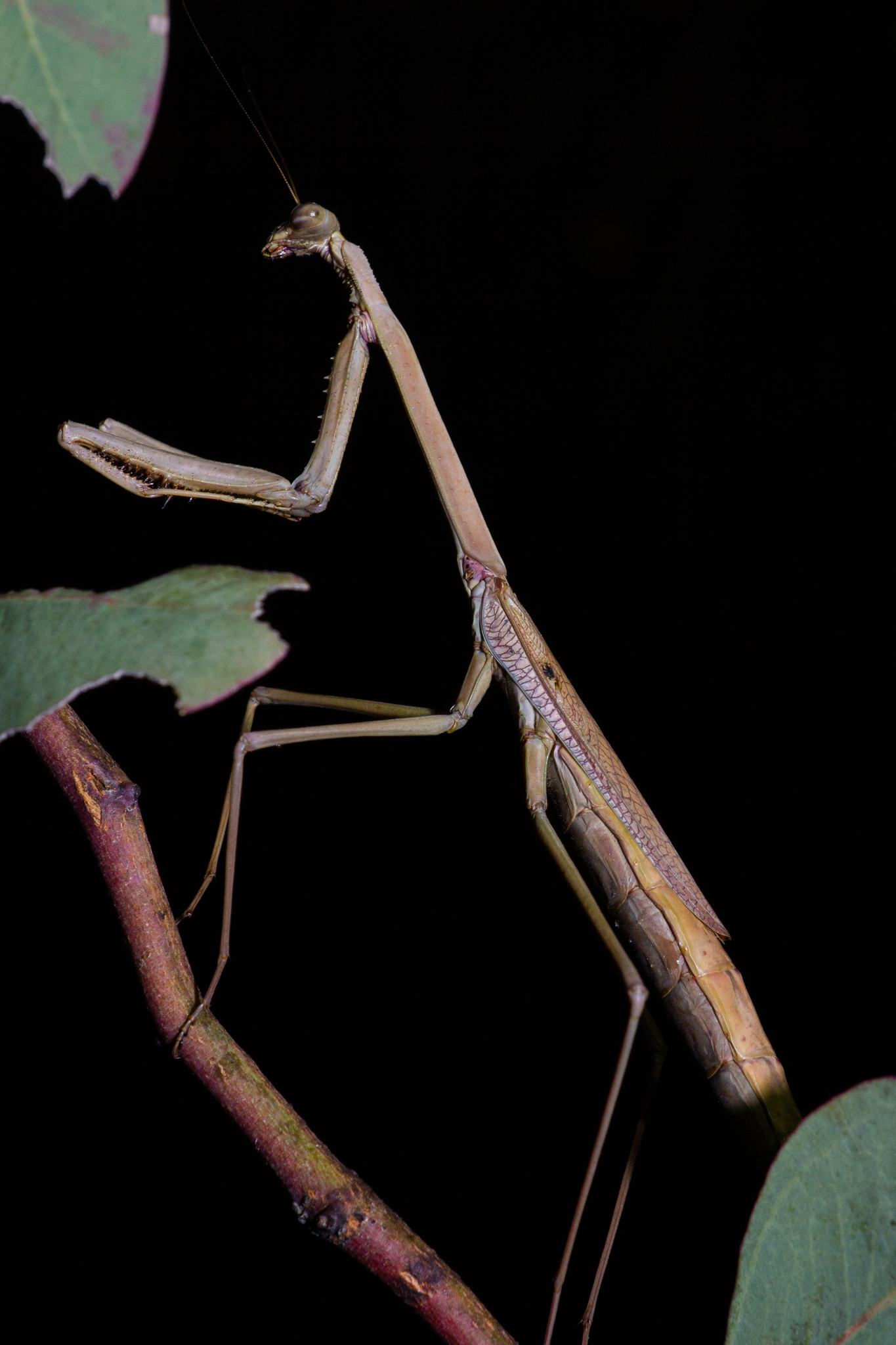
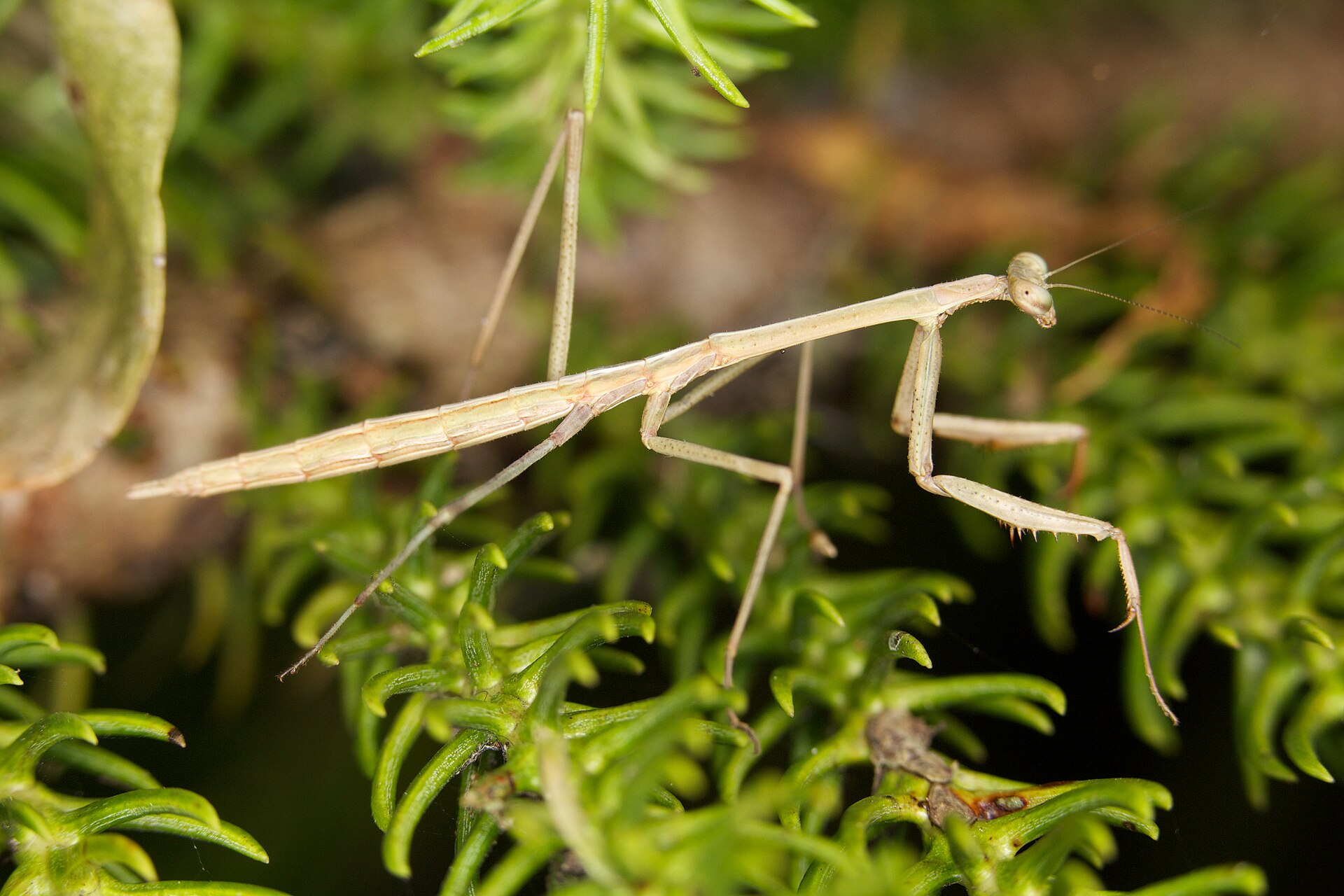
A stick that hunts. A stick insect hides so it won't be eaten. A stick mantis hides so it can eat.
Like other mantises, it has probably worn a disguise at every stage of its life. Mantis eggs can be mistaken for seeds, the young often mimic ants, and many adults look like sticks, twigs or leaves. So this one has been a seed, perhaps an ant, and now a stick.
The ambush is very old. The oldest mantis fossils with their bodies and legs preserved are about 136 million years old, from while dinosaurs walked the Earth, and they already had grasping front legs for catching prey. Since then, generation by generation, the mantises that looked a little more like their surroundings probably caught more and were caught less.
Everything that comes within reach of those front legs is being weighed up: food, or not food. You've been weighed up too.