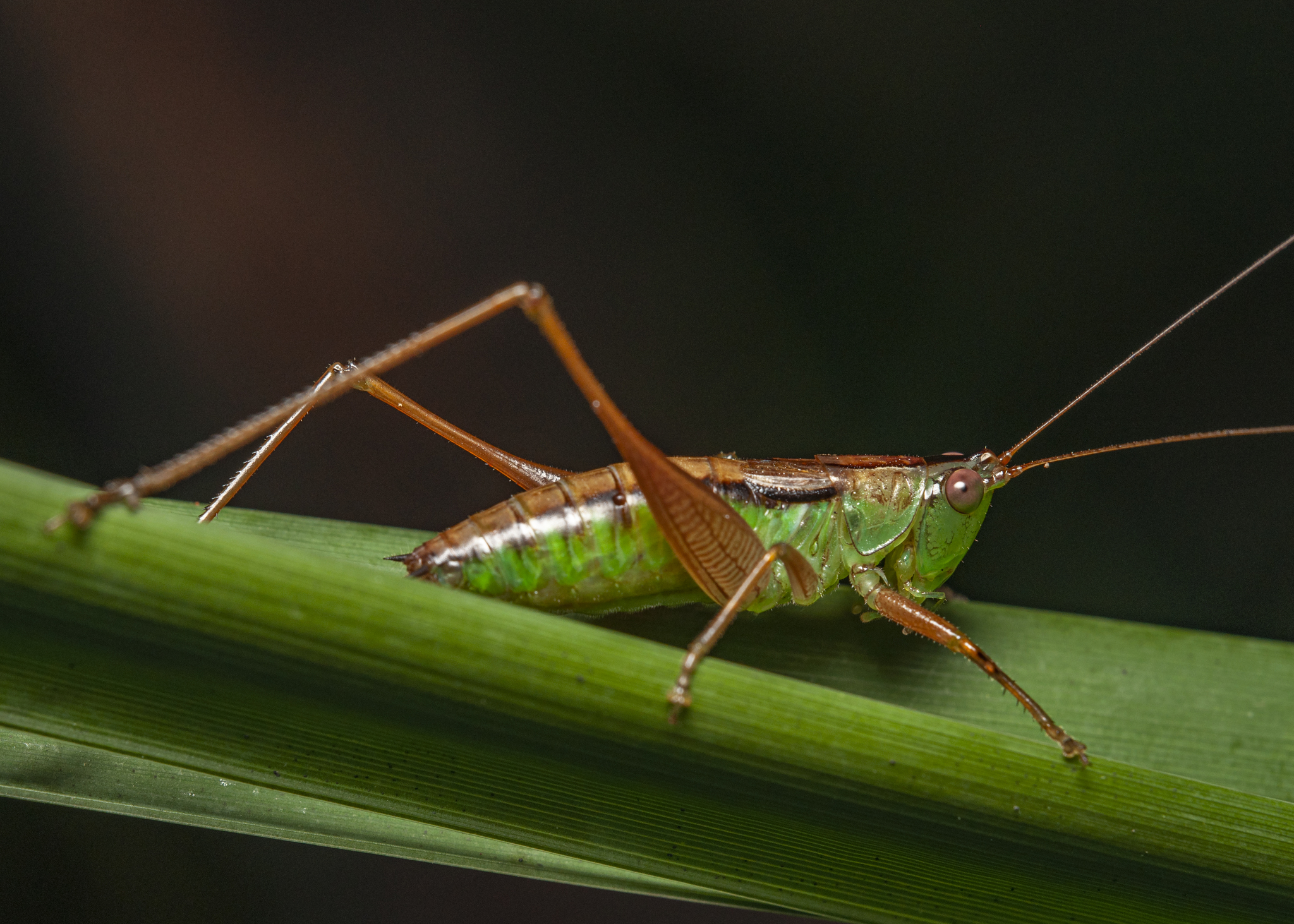
That low buzzing in the long grass, right through summer, may be blackish meadow katydids. At times they turn up in large numbers, living among grasses, reeds, lomandra and dianella, where the adults eat the flowers and seeds. The males make the sound by rubbing their wings together, calling for females.
Insects have been singing like this for a very long time. A katydid relative from 165 million years ago, in the Jurassic, kept its song-making wing parts so well that scientists could work out its call: a pure, musical note for attracting females, sung in forests of conifers and giant ferns. It's one of the oldest sounds anyone has been able to bring back.
Stand in the grass and listen. You're hearing the same kind of love song that once carried through the Jurassic ferns.