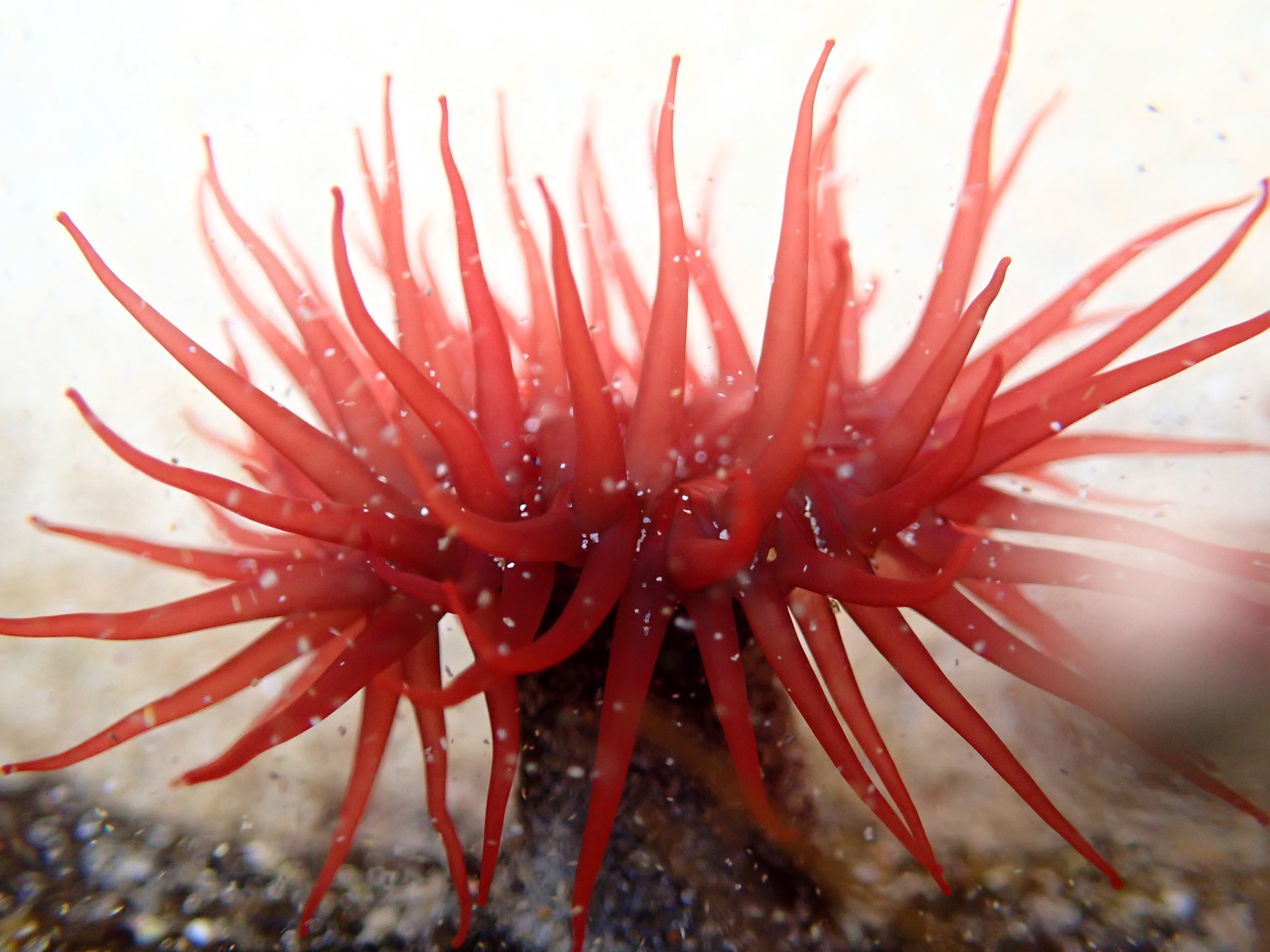
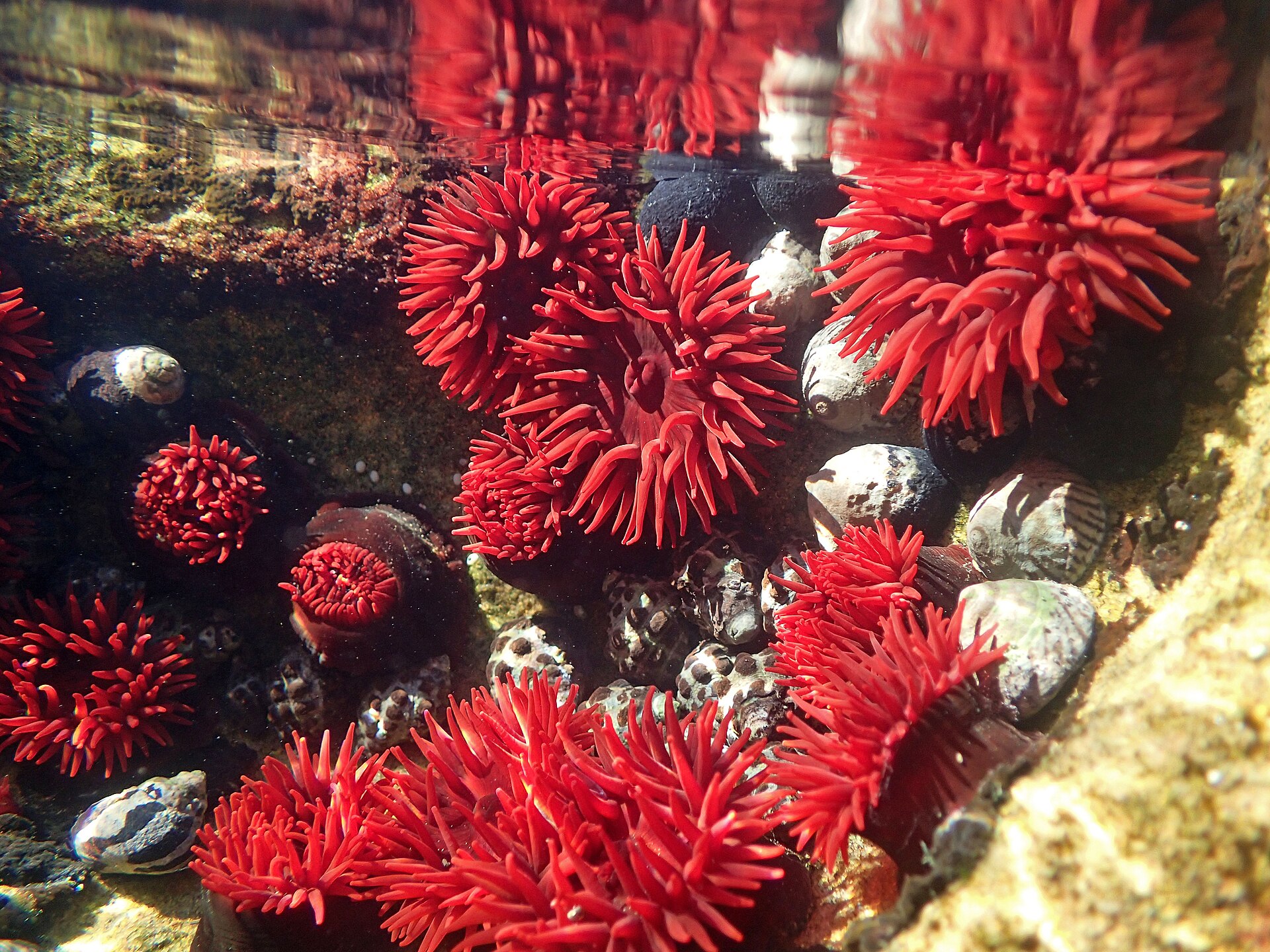
The small red anemones around this one are probably its children, and they came out of its mouth. Waratah anemone young are released fully formed through the adult's mouth, then settle on the nearest rock. That's why small ones are so often found next to a big one.
At low tide it pulls all its tentacles in and sits like a red blob, waiting for the water to return. It's a very old way of life. Tiny fossils from the very first stage of the Cambrian, which began about 539 million years ago, may be early relatives of today's sea anemones and corals. They're about half a millimetre long, and they already had 18 tentacles and a body plan like modern anemones'.
So the ring of tentacles in a rock pool is one of the oldest shapes in the animal world. When the tide comes back and it opens up again, you'll be looking at a design that may be more than half a billion years old.