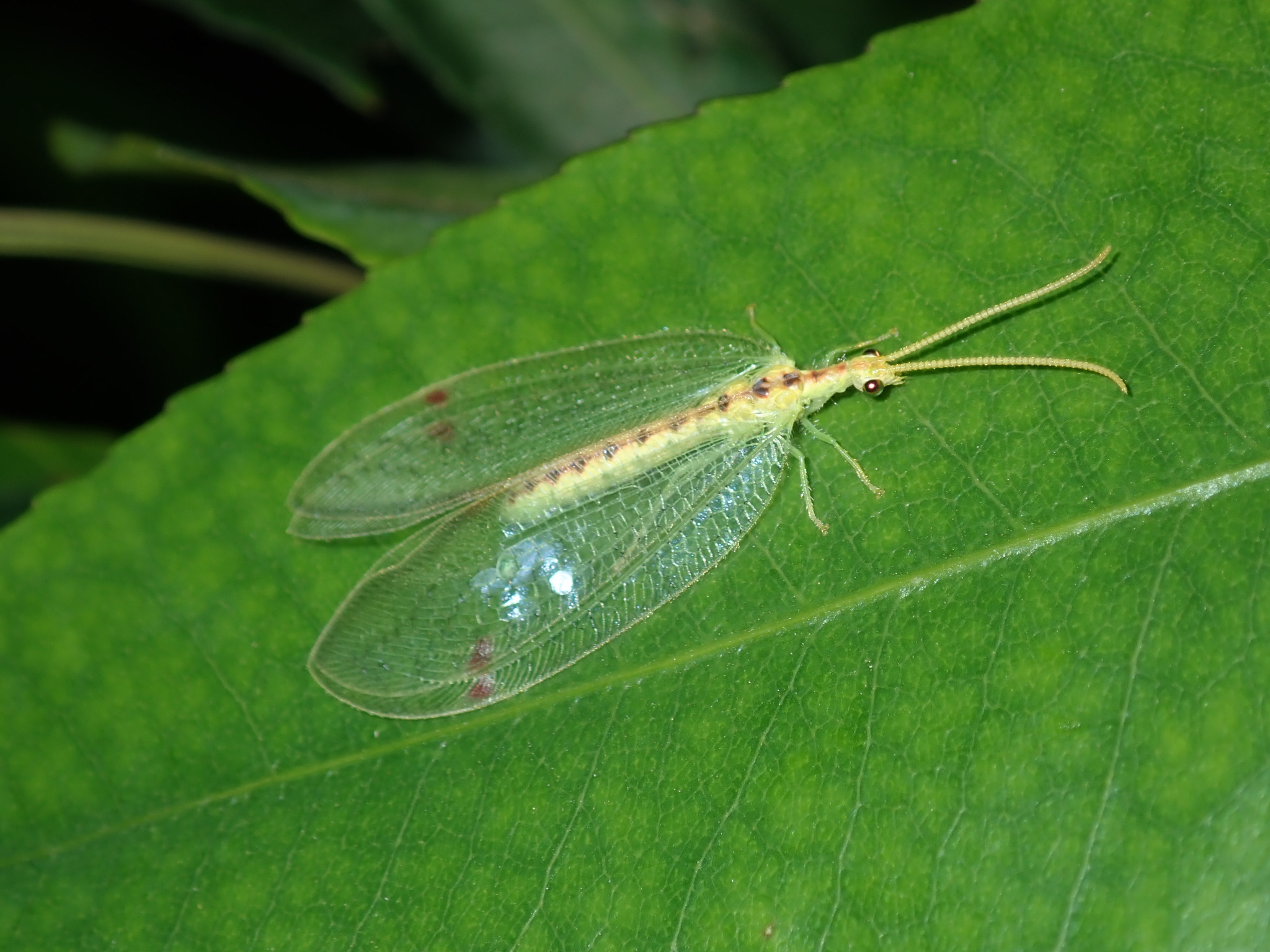
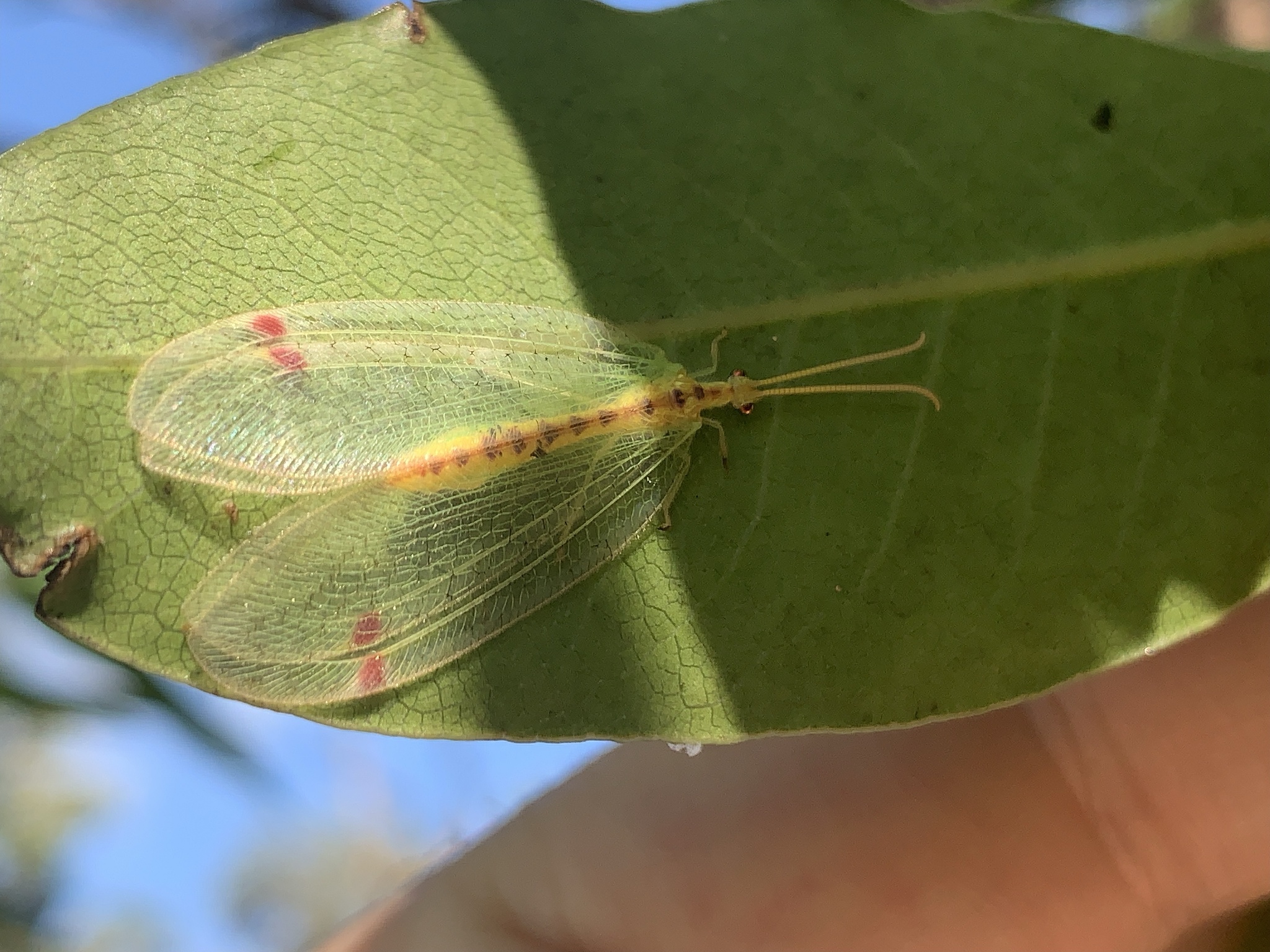
The delicate lacewing in front of you had a very different youth. Larvae of its family are flattened discs fringed with long, hair-like projections, and like most lacewing larvae they hunt, sucking prey dry through tube-shaped mouthparts. It spent its early life as a flat, hairy hunter, and only then grew these wings.
Its family's young used to be stranger still. Larvae of split-footed lacewings trapped in amber about 100 million years old show more variety in their heads and mouthparts than living ones. Since the age of dinosaurs, the family has lost many of its young forms. The ones left, like the larva this lacewing once was, are survivors of a much wilder range.
Look at the wings. Everything delicate about it came after the hunting was done.