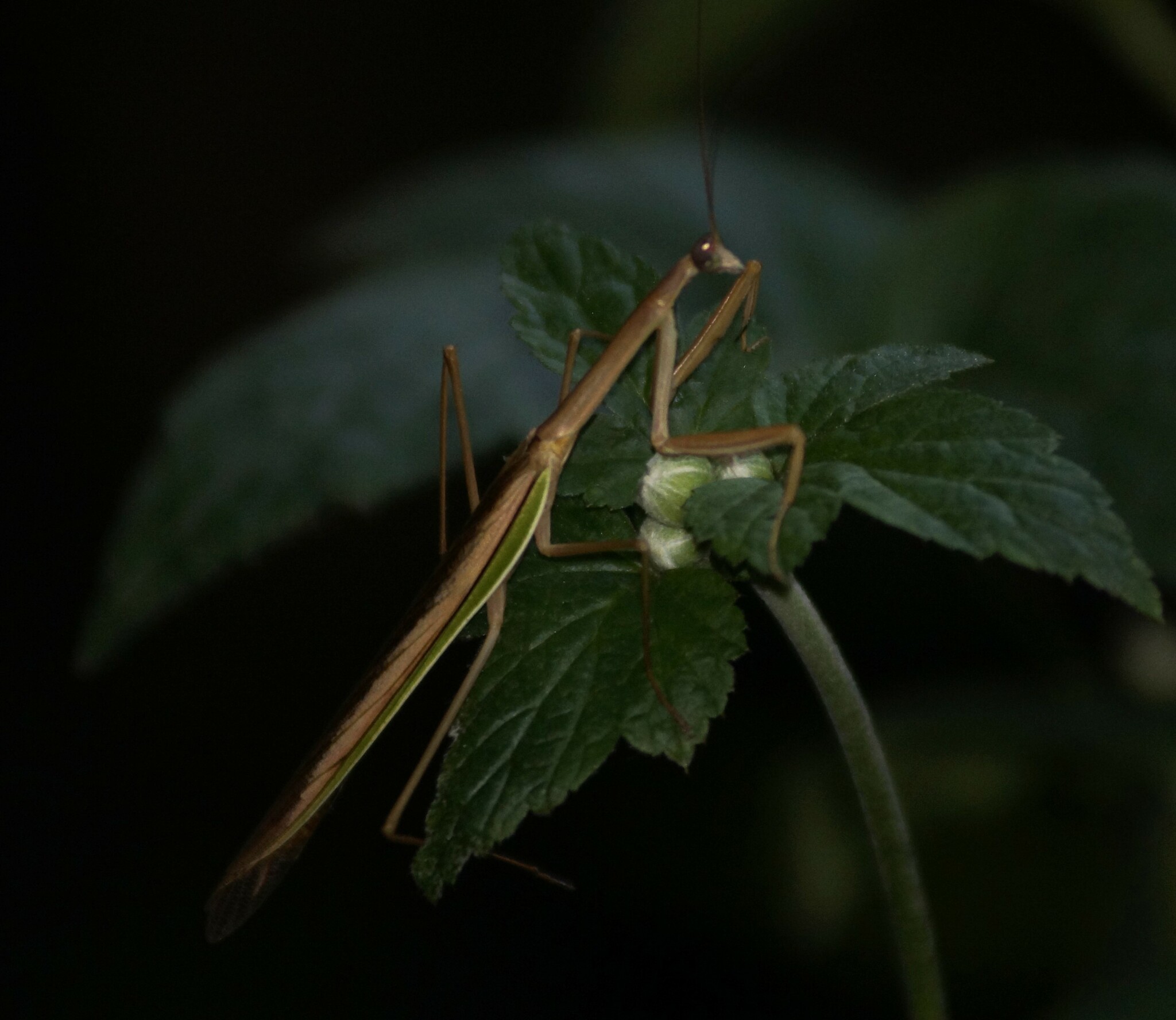
It waits among the flowers, camouflaged and still, until a bee or fly comes in for the nectar. Then it strikes, piercing its prey with spiny front legs.
The trap is old. The oldest mantis fossils with their bodies and legs preserved are from the Early Cretaceous, the oldest about 136 million years ago, and they already had grasping front legs for catching prey. That's about when the first flowering plants were appearing, between roughly 139 and 133 million years ago. By 99 million years ago, insects were pollinating flowers.
No one knows when mantises first started waiting at flowers. But perhaps, once flowers began drawing insects to them, it didn't take long for a hunter to realise where the insects would come.
The flower is advertising to bees. The mantis is listening.