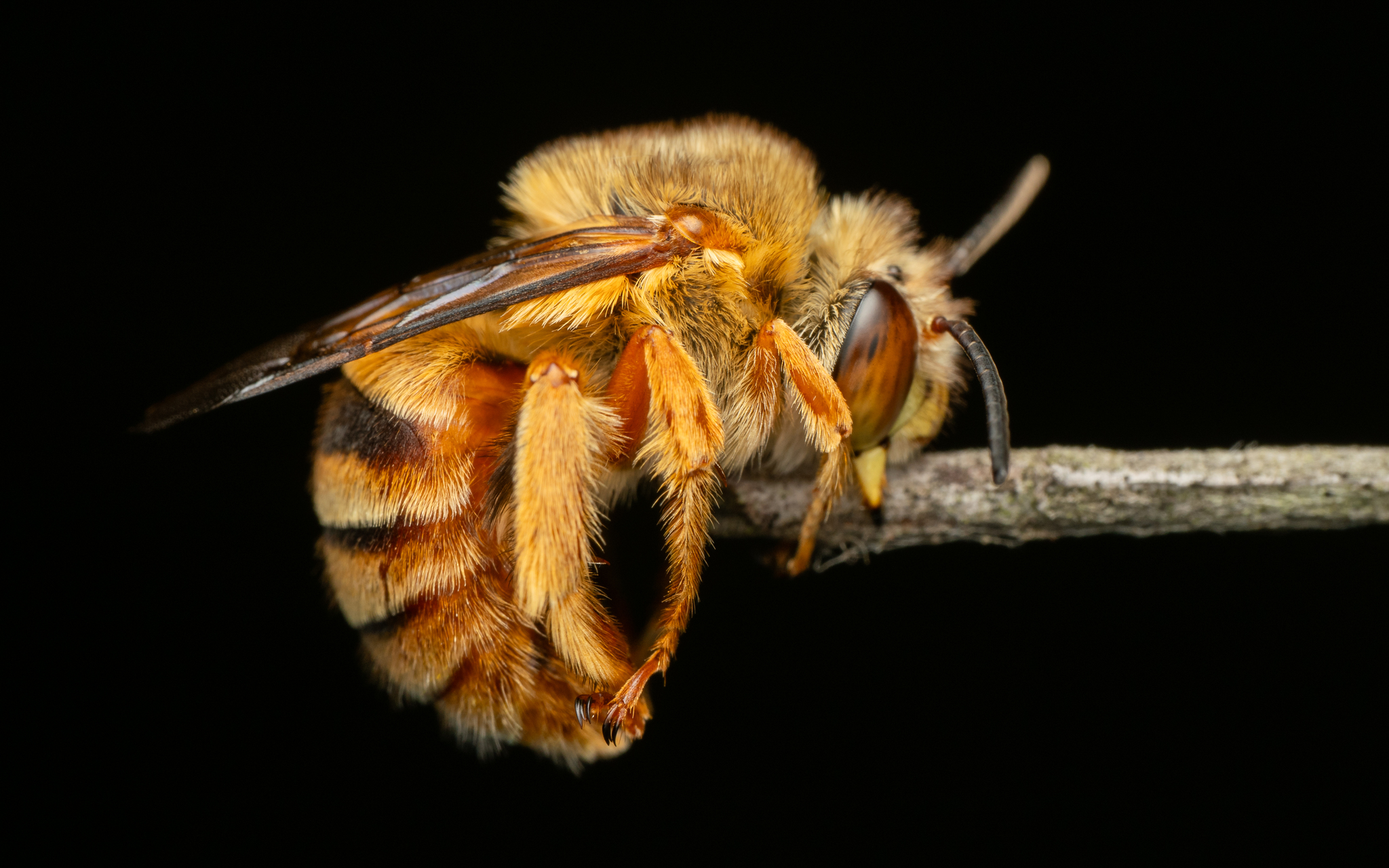
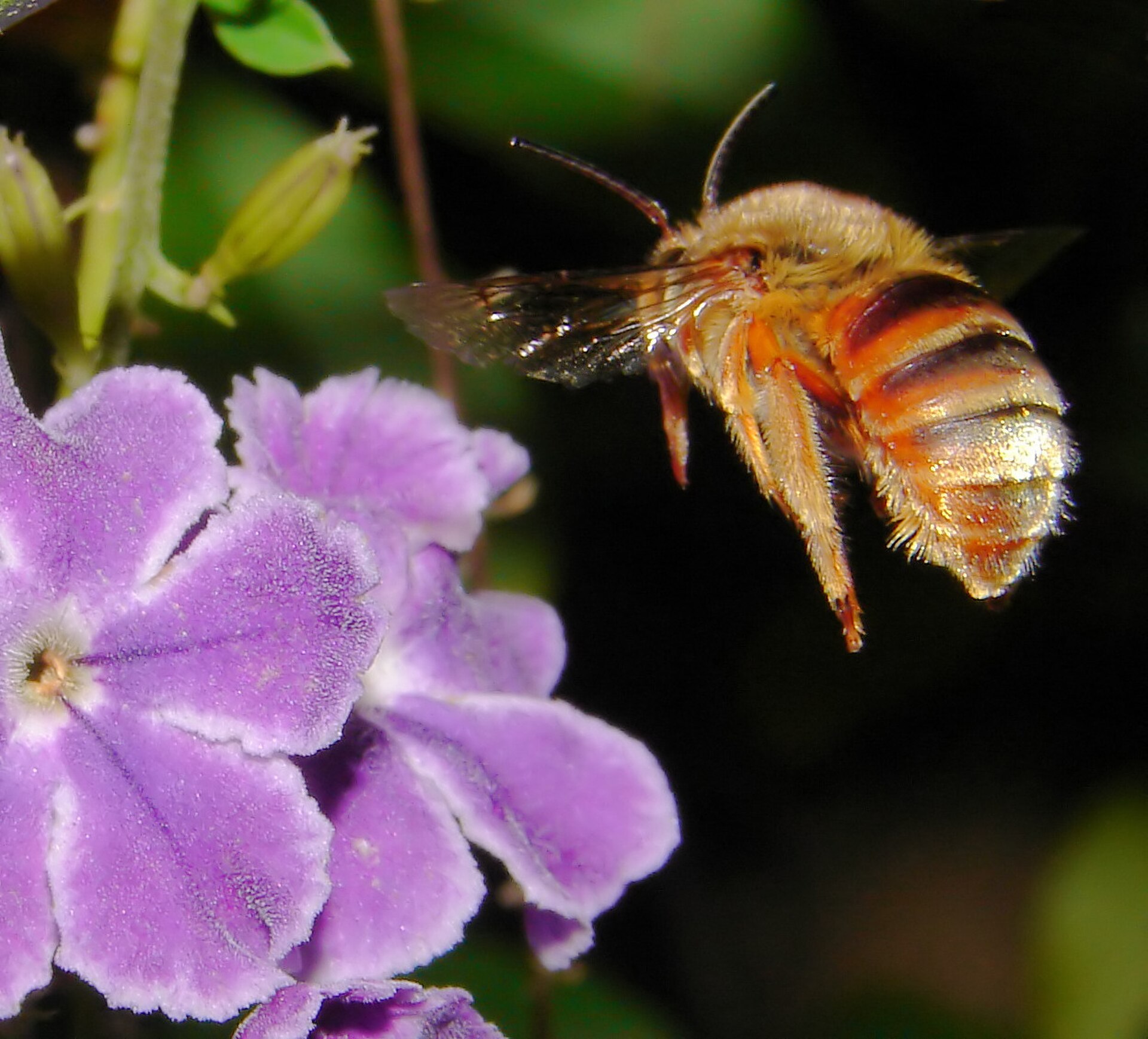
That golden, furry bee looks like the opposite of a wasp. It isn't. DNA from thousands of genes places the roots of the bee family tree inside a family of wasps. Somewhere back there, a line of hunters gave up meat. Bees eat nectar and pollen all their lives, and the teddy bear bee's fuzz is part of that deal: pollen sticks to it, and travels with the bee from flower to flower.
The switch is old. DNA suggests the ancestor of all living bees lived roughly 123 million years ago, in the age of the dinosaurs, around the same time as the big group of flowering plants that today makes up three-quarters of all flowering plant species. Bees and flowers grew up together.
Teddy bear bees have been seen resting by hanging onto a plant stem with just their jaws. If you find one like that, you're looking at a wasp that came over to the flowers' side.