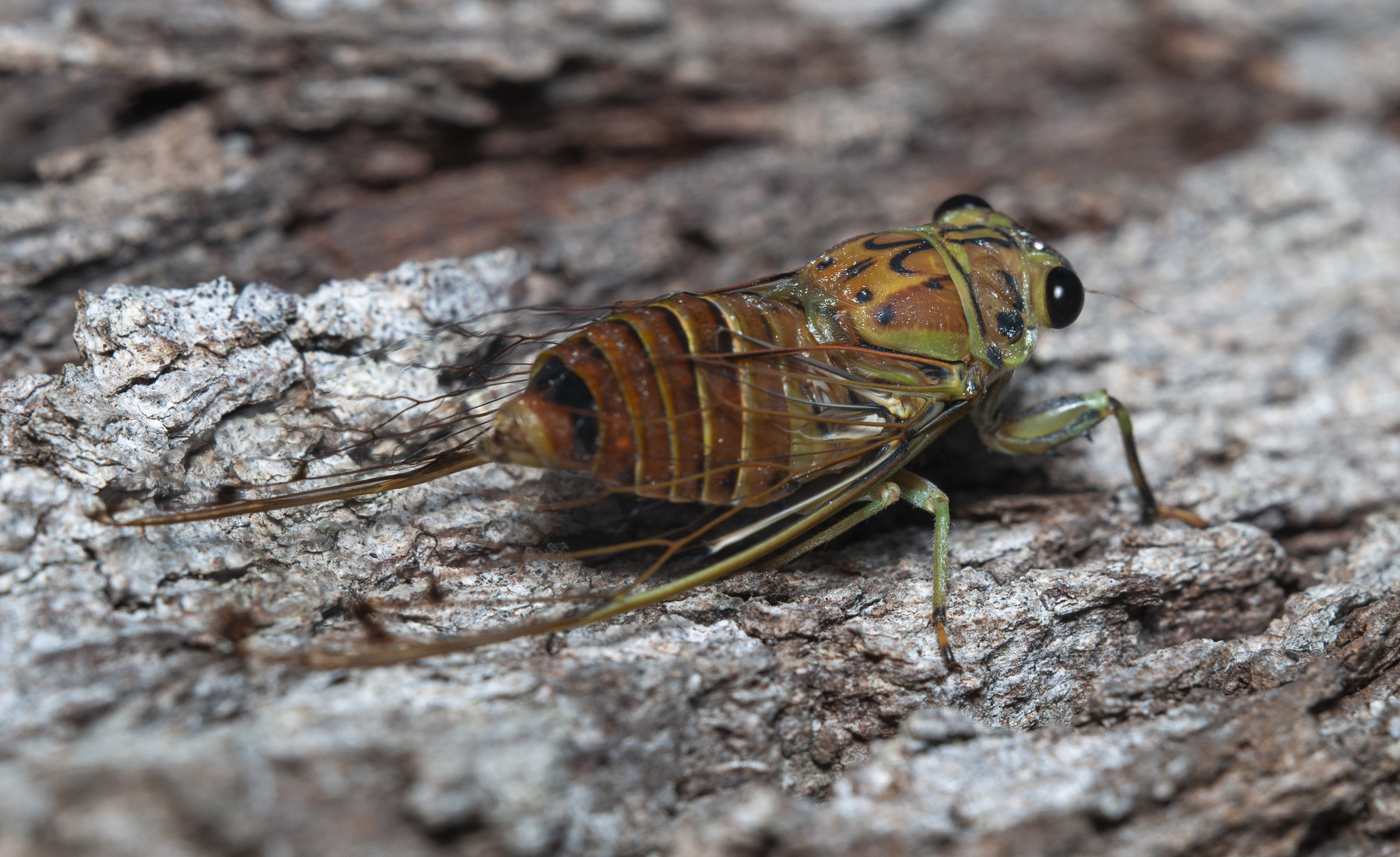
At dusk the brown bunyips start up together, a chorus that rises as the light goes.
The chorus keeps a calendar. One scientist in Brisbane listened to brown bunyips right through a summer and found their schedule shifts with the season. In November they sing in a chorus at dusk. In midsummer, mostly January, they sing loudly and without a break right up until near nightfall. By April they're back to a dusk chorus. Perhaps it's the heat of high summer that keeps them going; the study recorded the change, and the reason is still a guess.
So the song isn't just a sound. It's the shape of the summer, written in cicada: a short evening chorus at each end, a long blaze in the middle.
Listen to where in the evening it falls tonight. Come back in January, and see whether it's still going when the street lights come on.