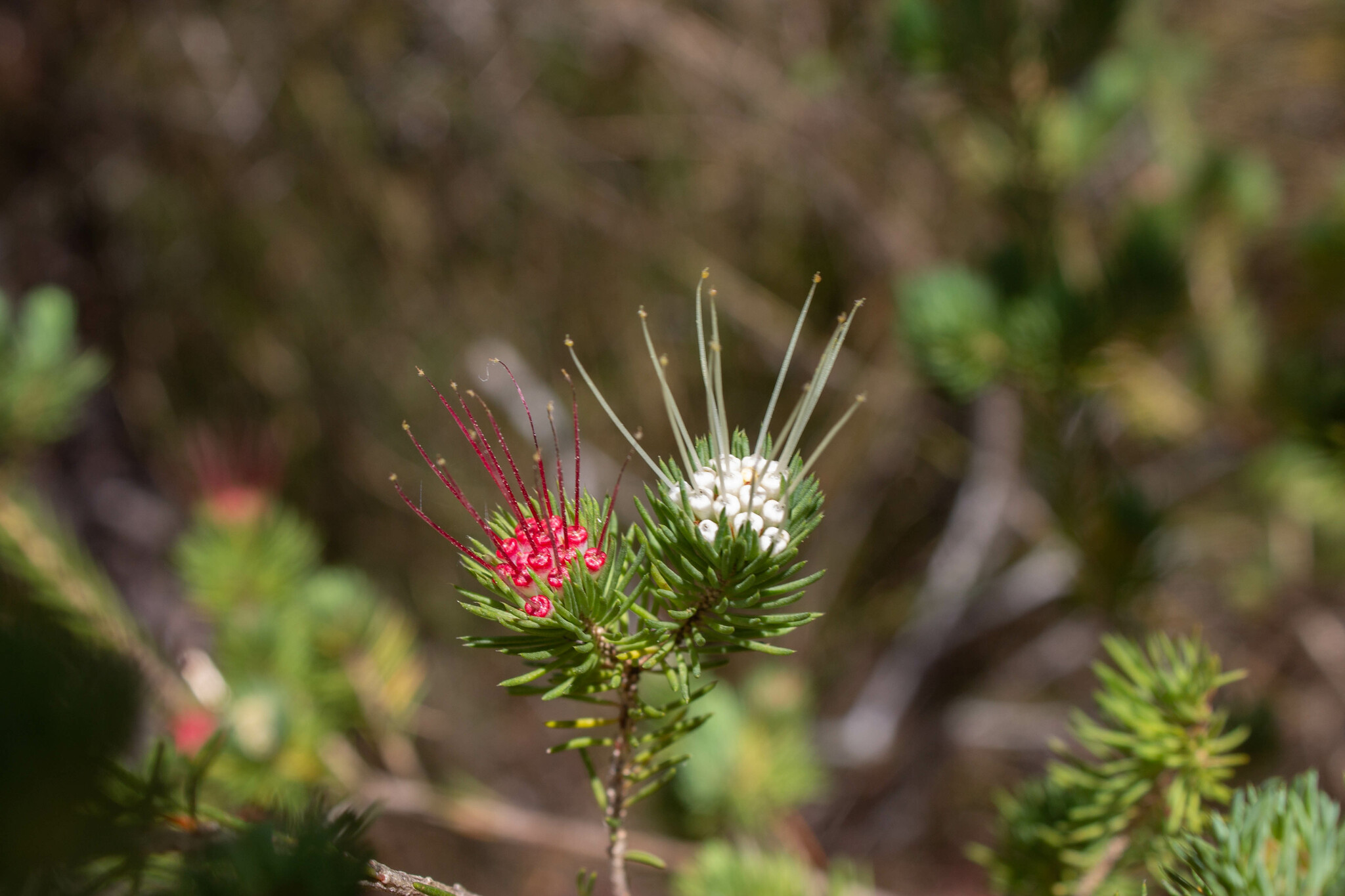
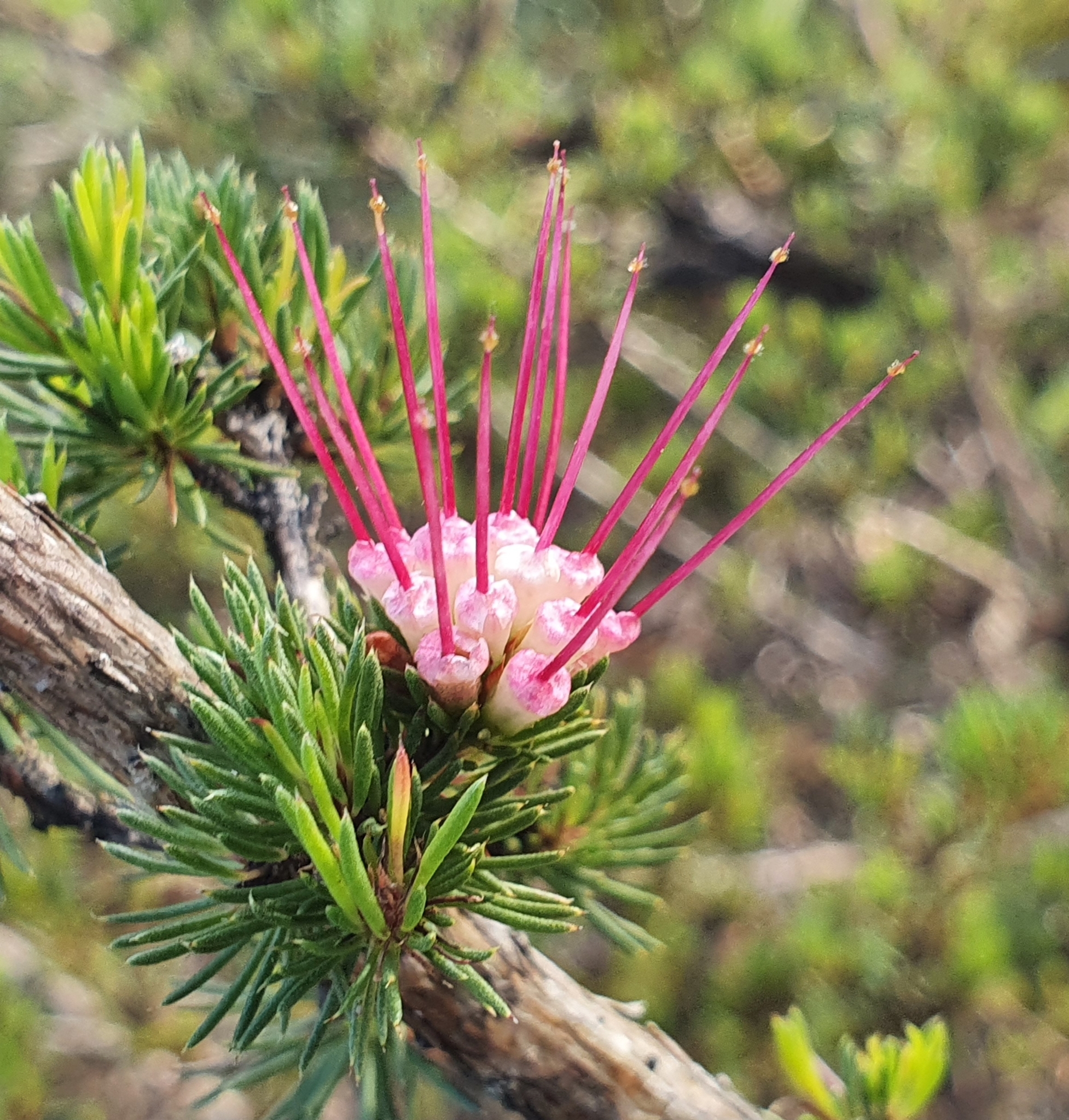
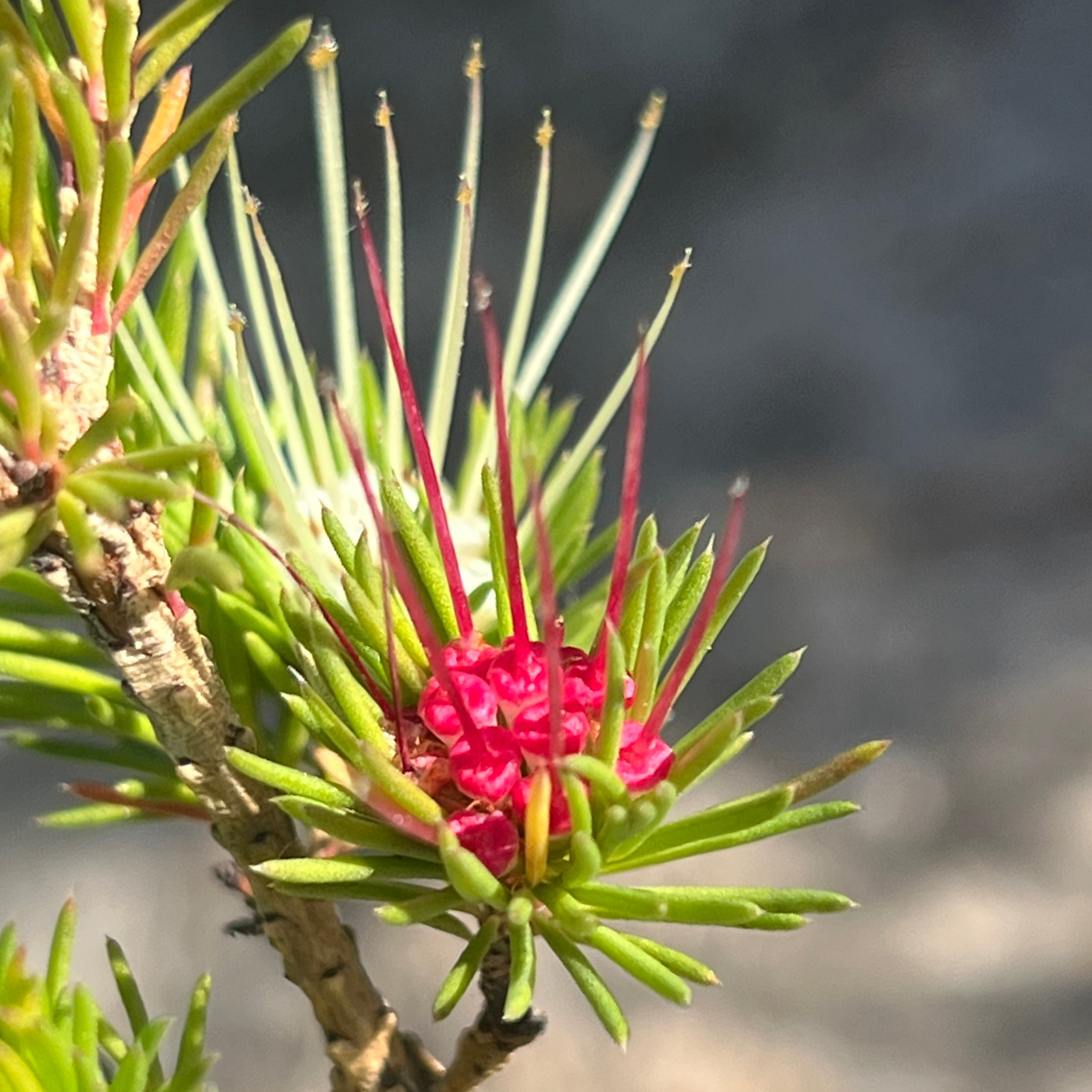
Its tiny tubular flowers open creamy-white and turn red as they age, and they're made for birds. Honeyeaters such as the Eastern Spinebill feed on the nectar. Honeybees want it too, but they take it from the base of the flower, without touching the pollen or the stigma. They probably don't pollinate it at all.
Honeybees came to Australia with European settlers. Long before that, flowers like this were being shaped by the bills that visited them, one generation at a time. Now a newcomer has found the back door, and takes the nectar without doing the job.
The plant's name carries the story of how such fits come about. Darwinia is named after Erasmus Darwin, a physician, poet and botanist, and the grandfather of Charles Darwin, who worked out how living things come to fit each other so closely.
If a spinebill comes by, look at how its bill meets the flower. That fit took a very long time to make.