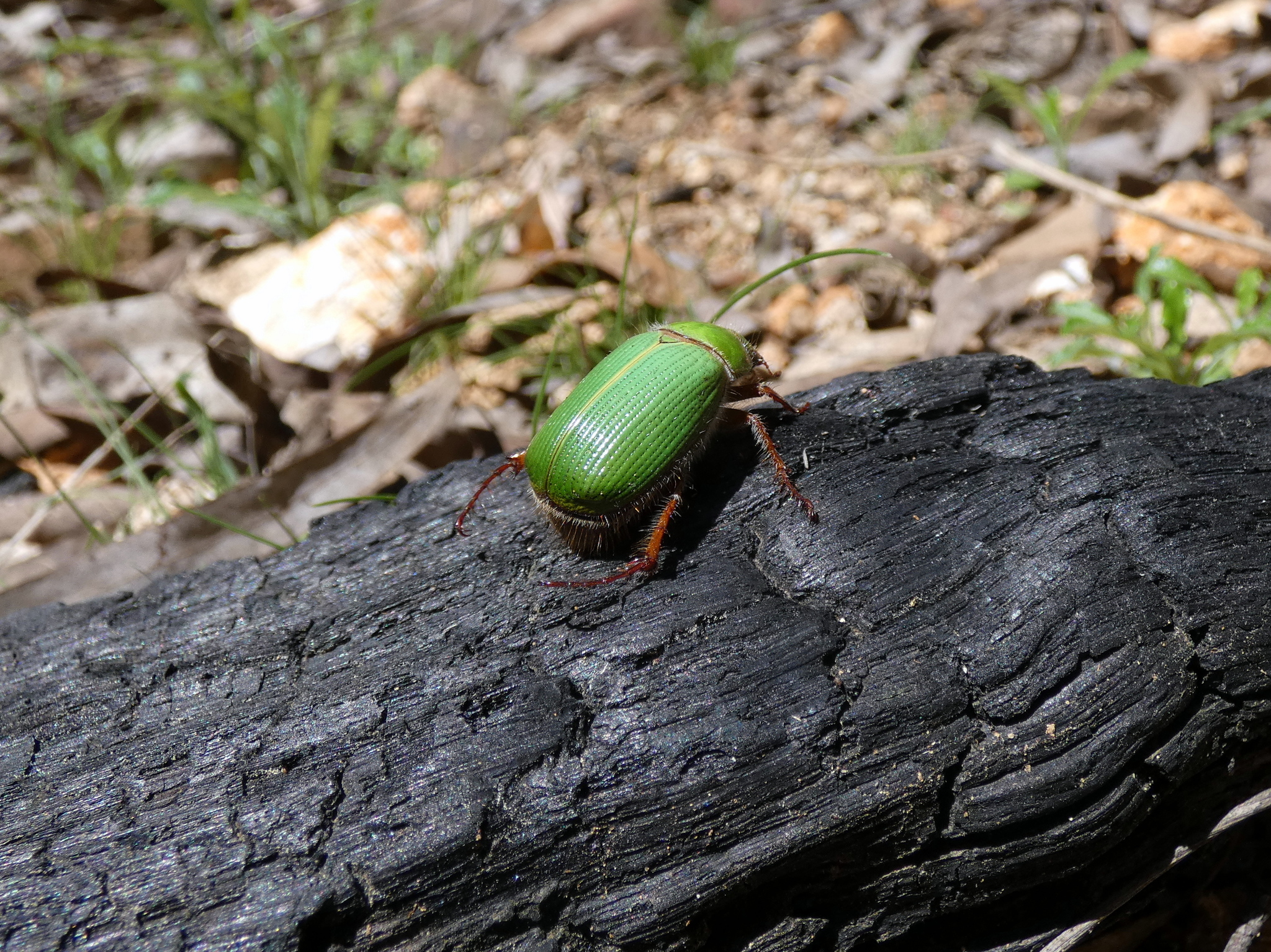
The shine you can see is only part of it. Beetles of its genus throw back an unusually large share of near-infrared light, the part of sunlight our eyes can't see, which carries more than half of the sun's energy.
They do it with a shell built in two layers. One Christmas beetle has the same trick. The two aren't close relatives, and researchers think they arrived at it separately, in similar places.
Reflecting sunlight should help an insect keep cool. In Christmas beetles, wing cases that soak up more sunlight warm up by an extra 3 to 5°C. So you'd expect the best reflectors in the hottest, driest country. They weren't. In a study of 46 species, the beetles with the strongest near-infrared mirrors, this genus among them, clustered in cooler places on the New South Wales coast. No one yet knows why.
In the sun, it's wearing a mirror you can't see.