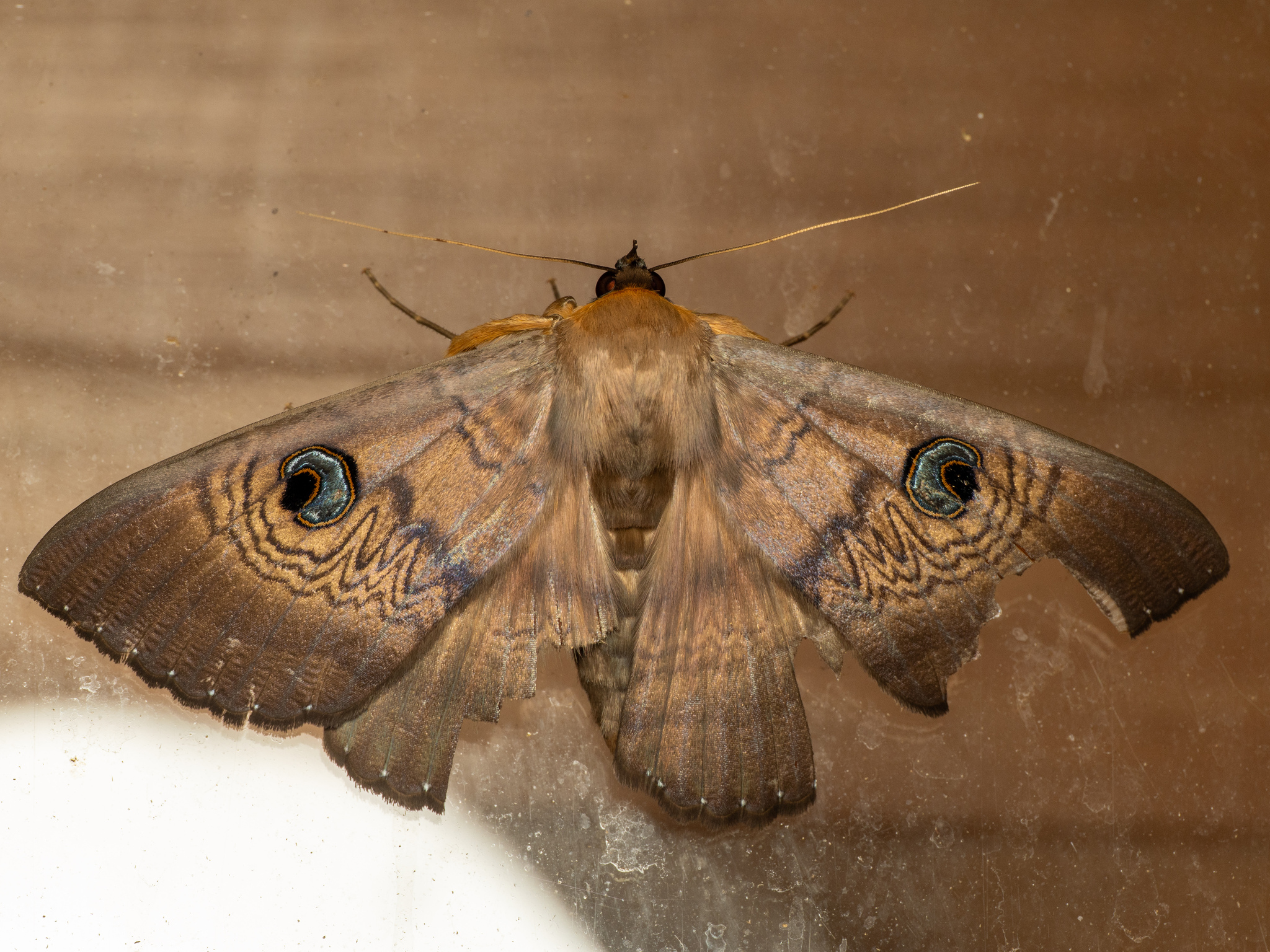
On each wing, an eye. A dark pupil, and in it pale highlights, like light glinting off a real, wet eye. It's paint, made of scales.
That glint is the clever detail. A flat spot is just a spot. A spot with a highlight looks round, alive and looking back. The spots may look like the eyes of an animal that predators fear, or may simply scare them off. Either way, the moth wins if a bird hesitates.
Moths have been playing tricks on hungry eyes for a long time. Fossil wing scales about 201 million years old are the earliest evidence of moths and butterflies. Ever since, birds and lizards and bats have been hunting them, and the moths that survived passed on whatever fooled them best. The highlight is a very old trick, made of dust-fine scales.
If you felt watched for a second there, you've just seen why it works.