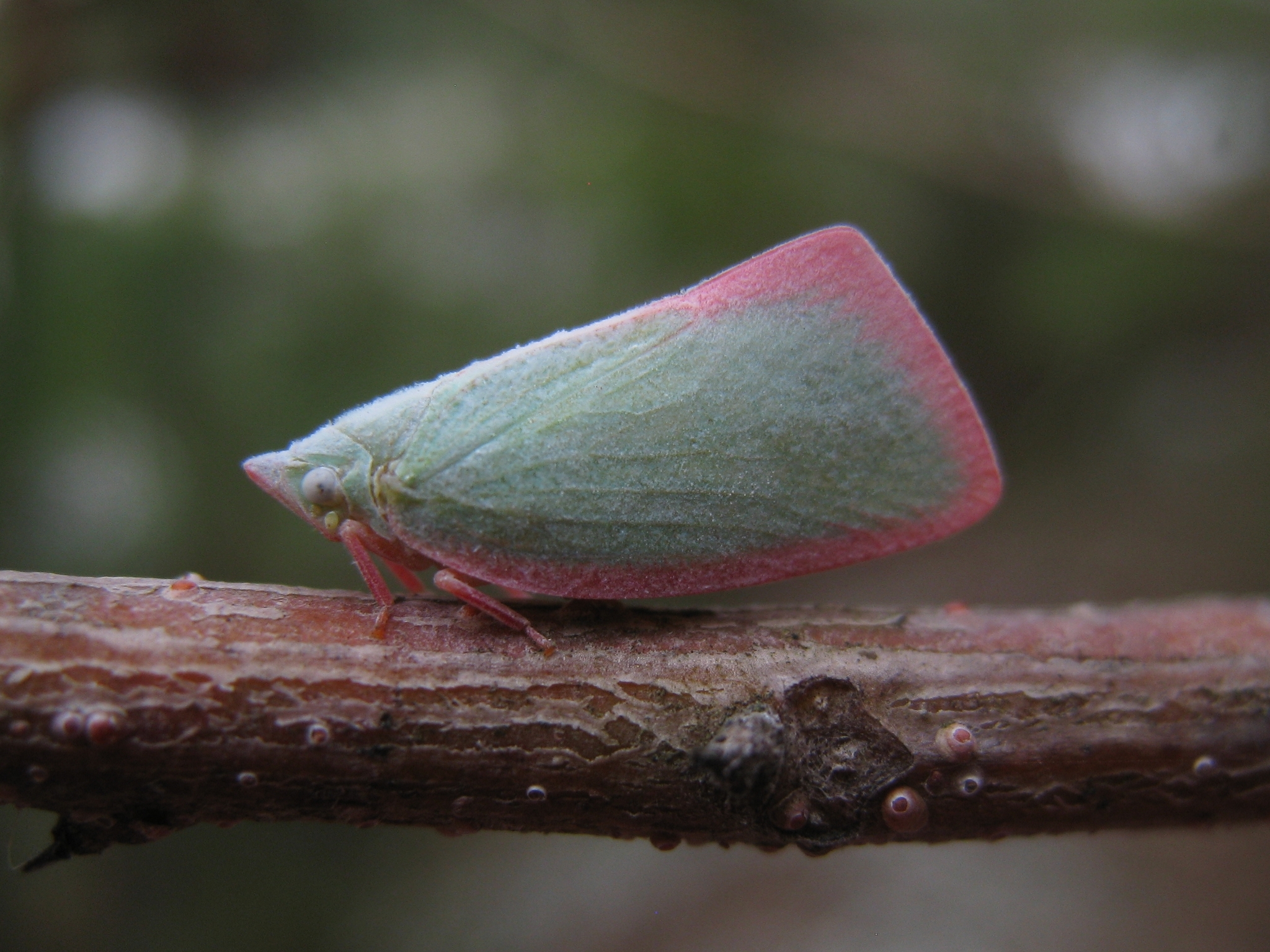
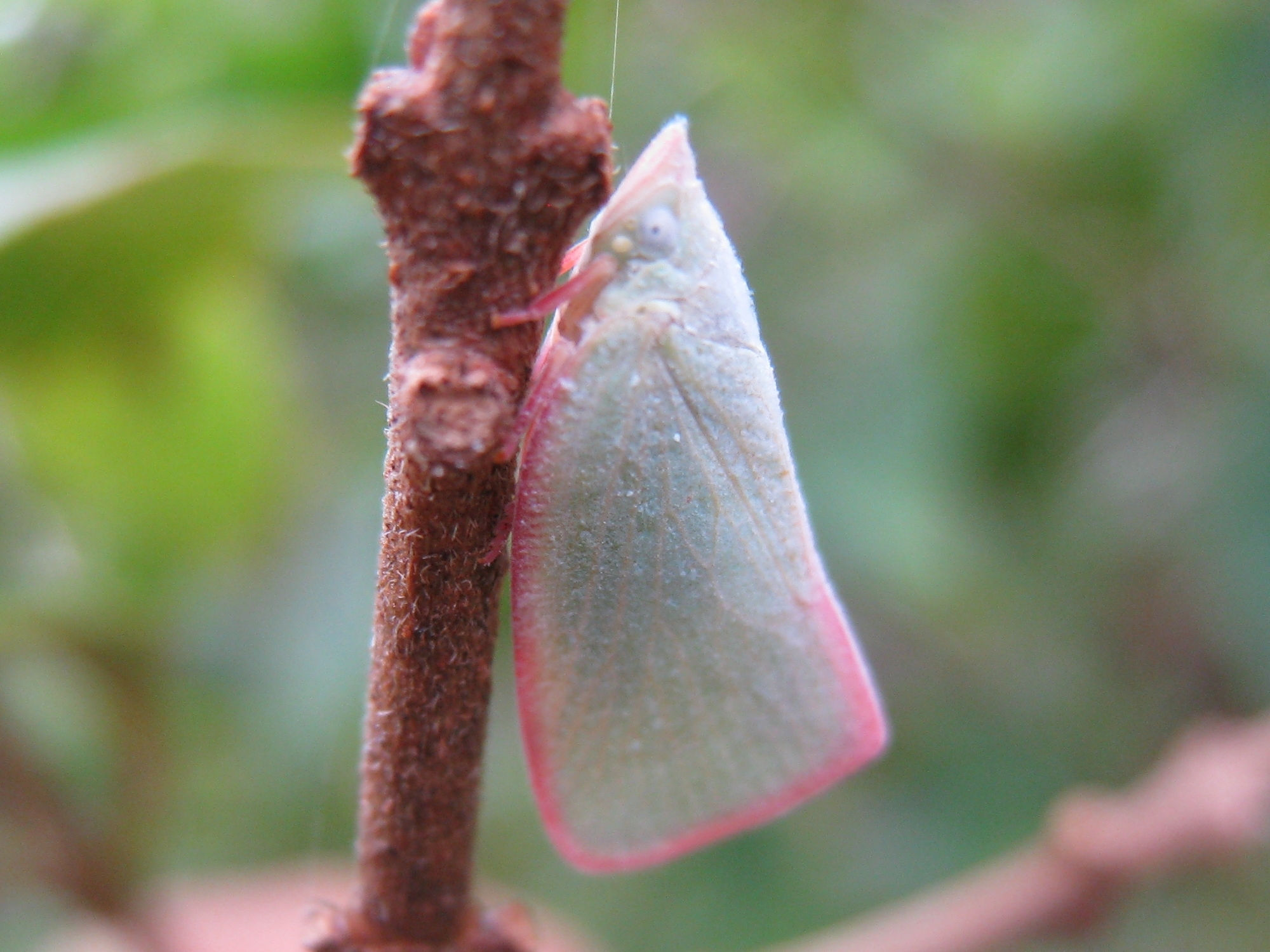
You're probably looking at the wrong end. Some young planthoppers grow long tails of wax that look like feelers, so people take their back end for their head.
People aren't the only ones it might fool. One idea is that a false head draws a predator's strike to the less important end, so the insect can escape with its real head intact. Many insects seem to play this trick, with eye-spots and fake antennae on their rear.
Its kind has had a long time to work on it. The group that includes planthoppers, shield bugs and cicadas goes back about 320 million years, to the Late Carboniferous, long before the first dinosaurs.
Which end did you look at first? If it was the tail, it worked on you too.