Male · 0 seasons
Maulder
Male. Distinctive flattened dorsal fin. Documented aggressive circling behaviour. Goes years between sightings.
Sex
Male
Seasons
0
Identifying mark
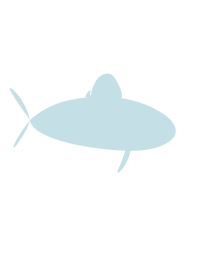
Distinctive flattened dorsal fin with a hump behind it
"I haven't spotted him in a few years," Andrew Fox told National Geographic. "I thought he may have got himself on the wrong side of the tuna industry, so I'm really happy to see him."2
That's Maulder. He vanishes. Years pass. Then the flattened dorsal breaks the surface — that collapsed fin with the hump behind it, a silhouette that belongs to exactly one shark in the catalogue — and the crew knows who's back.2
He is not gentle about it. Maulder circles the cage in tight, aggressive loops — not the cautious investigatory passes most males make, but something more focused and deliberate.2 On the National Geographic expedition he rose at a steep angle under the tender boat and bit the propeller.2
Where Imax is defined by presence — sixteen consecutive years — Maulder is defined by the gaps. Long, irregular absences that make every return a confirmation he's still alive, still out there somewhere in the southern Australian range, still willing to come back to the same rocky islets when whatever drives him brings him around again.
Identifying Marks
How to recognise Maulder
Flattened dorsal fin with a pronounced hump behind it. Unique profile — identifiable even from distant or partial shots. No public size estimate; proportions consistent with mature adult male.
Residency
Years at the Neptune Islands
Maulder: recorded in 0 of -Infinity years from Infinity to 2026.
Behaviour
Behavioural Notes
Aggressive circling at the cage — tight, focused, repetitive. Distinct from the investigatory passes of other males.1 Also observed rising steeply under the tender boat and biting the propeller.2